
home

Driscoll Home Services Blog

Home About Reviews AreaMap Blog Contact

Category: Central Texas News

  • New World Screwworm in Texas: What Central Texas Animal Owners Should Know

    New World Screwworm in Texas: What Central Texas Animal Owners Should Know

    If you live in rural Central Texas, chances are pretty good that you either own animals or have neighbors who do.

    Cattle, horses, dogs, cats and other animals are part of everyday life for many of us. That’s why the return of New World screwworm to Texas is something worth paying attention to.

    Texas has now confirmed New World screwworm cases in several parts of the state. A recent case involving a working ranch horse in Presidio County is another reminder that animal owners need to know what to watch for.

    At this time, Milam County is not listed among the Texas counties with New World screwworm infested zones. There is no reason to panic, but there is a good reason to be informed.

    Texas Animal Health Commission.

    What Is New World Screwworm?

    Despite its name, New World screwworm isn’t actually a worm.

    It is a type of fly. The problem begins when the female fly lays eggs in or near an open wound or other opening on a warm-blooded animal.

    When those eggs hatch, the larvae feed on living tissue.

    That’s what makes New World screwworm different from many of the maggots we normally associate with dead or decaying material. Screwworm larvae can actually burrow into healthy, living tissue and make a relatively small wound much larger and much more serious.

    Without treatment, an infestation can cause severe injury and can even kill an animal.

    Texas DSHS – New World Screwworm Information.

    What Animals Can Get Screwworm?

    Cattle are a major concern, but New World screwworm isn’t limited to cattle.

    It can affect horses, goats, sheep, pigs and other livestock. Dogs and cats can also become infested.

    Wildlife can be affected as well.

    That makes this an issue for more than ranchers. Someone with a couple of cows, a horse in the pasture or simply dogs and cats around the house should know what an infestation can look like.

    Pay Particular Attention to Wounds

    One of the most important things animal owners can do is pay attention to wounds.

    A cut from a fence, an injury, a surgical incision or another break in the skin can provide a place for a screwworm fly to lay its eggs.

    Check animals regularly, especially if you know they have a wound.

    If something that looked like a small injury suddenly becomes larger or doesn’t appear to be healing normally, take a closer look and contact your veterinarian.

    What Should You Look For?

    An animal with a New World screwworm infestation may appear irritated or uncomfortable.

    There may be an open wound or sore that is getting worse rather than better. The wound may have an unpleasant odor, and larvae may be visible in or around it.

    Those signs don’t automatically mean an animal has New World screwworm. There are other types of flies and larvae that can be found around wounds.

    The important thing is not to try to diagnose it yourself.

    If you see larvae in a wound or suspect a screwworm infestation, contact your veterinarian promptly.

    Dogs and Cats Need Watching Too

    Those of us in the country tend to think about cattle and horses first when we hear about an agricultural pest.

    But don’t forget the dogs and cats.

    Check pets when they come inside, especially if they’ve been injured or have an open sore. Outdoor dogs and cats deserve particular attention because they naturally spend more time around flies.

    If your pet has a wound, keeping it clean and following your veterinarian’s instructions becomes even more important while New World screwworm is present in Texas.

    Good Fly Control Can Help

    Keeping flies under control around animals is always a good idea.

    Keep animal areas as clean as reasonably possible and avoid allowing manure, wet bedding or other material that attracts flies to accumulate.

    Animal owners should also practice good wound care and talk with their veterinarian about appropriate fly-control and animal-health measures for their particular animals.

    There isn’t one solution that is right for every animal or every property, so veterinary guidance is especially important.

    What Should You Do If You Suspect Screwworm?

    Early detection is important.

    If you suspect New World screwworm in livestock or a pet, contact your veterinarian and the Texas Animal Health Commission as soon as possible.

    Don’t simply treat a suspicious wound and forget about it.

    Texas animal-health officials are tracking cases because knowing where infestations are occurring is an important part of controlling the spread.

    Suspected cases involving wildlife should be reported to the Texas Parks and Wildlife Department.

    What Is Texas Doing About It?

    New World screwworm isn’t new to Texas.

    It was once a serious livestock problem throughout the southern United States before being eradicated from the United States in the 1960s.

    One of the most interesting tools being used again today is the sterile insect technique.

    Large numbers of sterile male screwworm flies are released into affected areas. Female screwworm flies mate only once. When they mate with a sterile male, the eggs they produce don’t hatch.

    Over time, that can dramatically reduce the screwworm population.

    Federal and state officials are currently using sterile fly releases along with surveillance, animal inspections and other measures to fight the outbreak.

    What Does This Mean for Milam County?

    For now, this is a be aware, not be afraid situation for those of us in Milam County.

    Milam County is not currently listed as part of the state’s New World screwworm infested zone.

    But Texas already has confirmed cases, and the situation can change.

    If you own cattle, horses, dogs, cats or other animals, get into the habit of looking them over regularly. Pay attention to wounds. Keep animal areas reasonably clean and take unusual wounds or visible larvae seriously.

    Most importantly, don’t wait several days hoping that a suspicious wound will clear up on its own.

    Country Living Means Keeping an Eye on Things

    Living in Central Texas comes with a lot of benefits, but it also means keeping an eye on our property and the animals that depend on us.

    Sometimes it’s a loose fence board. Sometimes it’s a leaking pipe. And sometimes it’s noticing that an animal has a small injury that needs attention before it becomes something much bigger.

    New World screwworm is another one of those things we need to know about without becoming unnecessarily alarmed.

    At Driscoll Home Services, we’re part of the same rural Central Texas community. We’ll continue watching developments that could affect our homes, properties, families and animals and pass along information when there’s something our neighbors need to know.


  • Rockdale Texas Data Center Expansion: What It Could Mean for Milam County

    Rockdale Texas Data Center Expansion: What It Could Mean for Milam County

    Rockdale has seen some big changes since the old Alcoa plant closed. And another major development is now taking shape.

    Bitdeer Technologies Group announced on September 1, 2026, that it has purchased approximately 200 acres of land in Milam County. It will be near its existing Rockdale facility. The company paid approximately $100 million for the property. Saying it plans to use the land to support the development of artificial intelligence and high-performance computing infrastructure.

    For those of us who live in and around Rockdale, this is another sign of just how much the former industrial area is changing.

    SEC filing.

    What Is Planned for the Rockdale Texas Data Center?

    Bitdeer already operates a large facility near Rockdale that has primarily been associated with Bitcoin mining.

    The company has increasingly been moving into artificial intelligence and high-performance computing, commonly called HPC. The newly purchased property is expected to give Bitdeer room to develop more of that infrastructure alongside its existing operations.

    In simple terms, a data center is a facility filled with powerful computer equipment used to process and store enormous amounts of information. AI data centers require particularly large amounts of computing power.

    Bitdeer says its Milam County properties currently have approximately 563 megawatts of interconnected electrical capacity. Existing plans could eventually increase that to 742 megawatts.

    That’s one reason Rockdale is attractive for this type of development.

    Why Rockdale?

    Older residents of Milam County will remember when the Alcoa aluminum plant was one of the area’s major employers.

    Aluminum production is gone. But some of the infrastructure that supported large industrial operations helped make this part of Milam County attractive to another generation of large-scale businesses.

    Bitdeer specifically pointed to Rockdale’s existing electrical connections, transmission infrastructure and substations when discussing its plans for the property.

    The company now owns or operates approximately 255 acres in Milam County.

    From Aluminum to Bitcoin to Artificial Intelligence

    The changes around the former Alcoa property tell an interesting story about how our local economy continues to evolve.

    For decades, the area was associated with aluminum production. More recently, Rockdale became nationally known for large cryptocurrency mining operations.

    Now artificial intelligence may become another part of that story.

    Bitdeer says its existing Rockdale operation is being evaluated for a transition from cryptocurrency mining toward AI cloud or data-center uses, while the newly purchased land gives the company additional room for future AI and high-performance computing development.

    Exactly how quickly that transition will happen remains to be seen.

    What Could This Mean for Milam County?

    A $100 million land purchase is significant for a rural county, but it is important not to get ahead of what has actually been announced.

    Large projects can bring construction activity, investment and other economic opportunities to an area. They can also raise questions among local residents about infrastructure, utilities, water, roads and long-term development.

    Those are reasonable things for Milam County residents to watch as the project moves forward.

    At this point, however, Bitdeer’s announcement primarily concerns the acquisition of the property and the company’s plans for future AI and high-performance computing development.

    We don’t yet know all of the details about what will ultimately be built on the new property or how development will affect the surrounding community.

    Data Centers and the Texas Power Grid

    The amount of electricity required by data centers has become a major issue throughout Texas.

    That makes Rockdale’s existing electrical infrastructure particularly important.

    Bitdeer says its Rockdale location already has a large-load electrical connection and established transmission and substation infrastructure. The company believes those existing connections put the property in a strong position for future development.

    Texas officials and regulators are also taking a closer look at requests from large data centers seeking connections to the state’s electrical grid. With AI development growing rapidly across Texas, this is an issue that will likely continue receiving attention.

    For local residents, it is worth following what happens—not assuming that either the best- or worst-case predictions will necessarily come true.

    What About Water?

    Water is another subject that naturally gets people’s attention in Central Texas.

    Bitdeer’s announcement says its Milam County sites have a dedicated water supply, but that statement alone doesn’t tell us what future AI development will require.

    Different data centers use different cooling technologies and can have very different water requirements.

    As plans for the Rockdale property become more specific, this is another area where local residents should pay attention to actual project information rather than rumors or assumptions.

    Another Chapter for Rockdale

    Those of us who have lived around Rockdale for a long time have watched this area go through quite a transformation.

    The Alcoa plant once represented a huge part of the local economy. After its decline and closure, few people probably imagined that the same area would eventually attract cryptocurrency companies and artificial intelligence infrastructure.

    Yet that is exactly what is happening.

    Whether this latest development ultimately becomes a major AI data center or evolves in another direction, a $100 million investment in 200 acres of Milam County property is something worth watching.

    At Driscoll Home Services, we work with families and homeowners throughout this part of Central Texas. Changes this large can eventually affect the communities where we live and work, which is why we’ll continue keeping an eye on developments around Rockdale and throughout Milam County.

  • New Texas Manufactured Home Law: What Central Texas Homeowners Should Know

    New Texas Manufactured Home Law: What Central Texas Homeowners Should Know

    A new Texas law affecting manufactured homes went into effect September 1, 2026. In Central Texas, manufactured homes are a common part of both rural and small-town living. So this is a change worth knowing about.

    Senate Bill 785 changes some of the rules Texas cities can use when deciding where new manufactured homes may be placed.

    Texas Legislature Online.

    SB 785 Resource Center.

    What Changed Under the New Texas Manufactured Home Law?

    Under the new law, most Texas cities that have zoning regulations can no longer use their zoning rules to completely exclude new HUD-code manufactured homes from the city.

    Cities with zoning must provide at least one residential zoning classification or district where a new HUD-code manufactured home can be installed by right.

    That doesn’t mean manufactured homes can suddenly be placed anywhere.

    Cities still have considerable control over which areas are designated for manufactured homes. What has changed is that, in most cases, a city with zoning must provide an actual area where new manufactured homes are allowed.

    The Law Applies to New HUD-Code Manufactured Homes

    There is an important distinction in the new law.

    Senate Bill 785 specifically addresses new HUD-code manufactured homes. It does not mean that every mobile home or older manufactured home is covered by the new requirements.

    HUD-code manufactured homes are homes built according to federal manufactured housing construction and safety standards.

    This is one reason homeowners should check the rules for their particular property before buying or moving a home.

    Cities Still Have Local Zoning Authority

    The new Texas manufactured home law doesn’t eliminate local zoning.

    A city can still decide where manufactured homes are appropriate and establish zoning districts for them. The law simply prevents most cities with zoning from having rules that effectively leave no place within the city for a new HUD-code manufactured home.

    There are also exceptions involving historic districts, certain existing deed restrictions and some municipalities that meet specific requirements under the law.

    So if you’re considering purchasing property or placing a manufactured home, don’t assume the new state law automatically means you can put the home on a particular piece of land.

    Check first.

    What About Property Outside the City Limits?

    Here in Central Texas, this is particularly important because many of us don’t live inside incorporated city limits.

    Someone living outside Rockdale, Cameron, Thorndale, Milano or another community may be dealing with very different rules than someone purchasing property inside town.

    The new law specifically changes how municipalities regulate manufactured housing through zoning.

    If you’re considering a manufactured home on rural property, you should still check for deed restrictions, utility requirements, septic requirements, floodplain concerns, access and any other rules that may apply to the property.

    Deed Restrictions Can Still Matter

    One thing homeowners should not overlook is deed restrictions.

    A piece of property may be located in an area where local zoning allows a manufactured home but still have private deed restrictions affecting what can be placed there.

    The new law contains protections for certain deed restrictions that were already in existence.

    That’s another good reason to research a property carefully before purchasing a manufactured home or making plans for a homesite.

    Don’t Forget the Property Around the Home

    Whether you own a manufactured home or a traditional site-built home, many of the same property-maintenance issues apply.

    Good drainage around the home is important. Gutters and downspouts need to move water away from the structure. Trees and limbs should be kept away from the roof, and homeowners should watch for plumbing leaks and water collecting underneath or around the home.

    In Central Texas, we also have to think about extreme heat, drought, severe thunderstorms and the occasional hard freeze.

    A little preventive maintenance can save a lot of trouble later.

    Why This Matters in Central Texas

    Manufactured homes have long been part of rural Central Texas.

    For some families they provide an affordable way to own a home. They can also make it possible for family members to live near one another while still maintaining separate households.

    The new Texas manufactured home law may create additional opportunities in some communities that previously had very restrictive zoning.

    But it is not a blanket permission to place a manufactured home anywhere.

    Before buying a home or property, find out exactly what rules apply to the location you’re considering.

    A Good Rule: Check Before You Buy

    If you’re thinking about buying property for a manufactured home, a few phone calls before signing anything can prevent some expensive surprises later.

    Check with the city if the property is inside city limits. Review any deed restrictions. Find out about water, electricity and wastewater service. If the property will use a septic system, determine what will be required.

    And make sure you know whether the particular home you’re considering qualifies as a new HUD-code manufactured home under the law.

    The new law may open some doors for manufactured housing in Texas, but every property is different.

    Here at Driscoll Home Services, we spend a lot of time working in homes and on properties throughout Central Texas. One thing we’ve learned over the years is that it is almost always easier—and cheaper—to ask questions and find potential problems before you make a major decision rather than afterward.

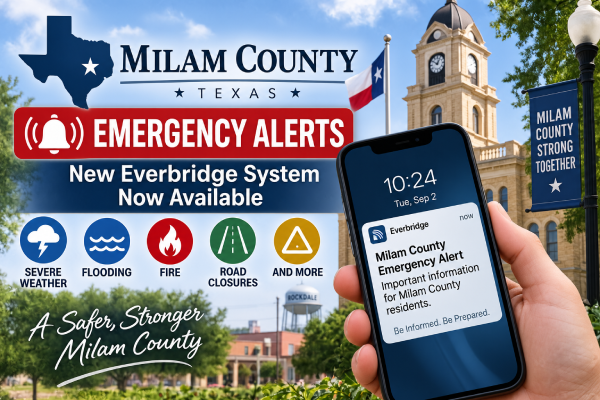
  • Milam County Emergency Alerts: New Everbridge System Now Available

    Milam County Emergency Alerts: New Everbridge System Now Available

    When severe weather or another emergency is headed our way, knowing what’s happening as quickly as possible can make a real difference.

    Beginning September 1, Milam County moved to Everbridge for its emergency notification system. The new system replaces CodeRED and can send important public-safety information to residents, businesses and others throughout the county.

    For those of us who live in Milam County, this is one of those changes that’s worth taking a few minutes to learn about—before we actually need it.

    What Are Milam County Emergency Alerts?

    The Everbridge system allows local officials to send emergency notifications about situations affecting our communities.

    These alerts can include information about severe weather, fires, flooding, road closures, utility problems and other emergencies.

    Depending on the information and preferences associated with your account, notifications may be delivered through several methods, including your phone.

    That’s particularly useful in a rural county like ours, where conditions can be very different from one community to another.

    A storm affecting Cameron may not be affecting Rockdale in quite the same way. A flooded road, fire or other emergency may be important to people in one particular part of the county.

    Local alerts can help provide information that is relevant to where we actually live.

    Milam County Has Switched From CodeRED to Everbridge

    Residents may recognize the name CodeRED, which Milam County previously used for emergency notifications.

    As of September 1, the county has transitioned to Everbridge.

    Existing CodeRED information is expected to transfer to the new system, but residents are still being encouraged to create an Everbridge account and review their notification preferences.

    I wouldn’t assume that because you were registered before, there’s nothing else you need to do.

    Take a few minutes to make sure your information is correct and that your notification preferences are set the way you want them.

    Register for Everbridge.

    Don’t Wait Until the Weather Turns Bad

    One of the worst times to figure out how an emergency-alert system works is when you’re already in the middle of an emergency.

    We’ve seen plenty of reminders here in Central Texas that our weather can change quickly.

    Severe thunderstorms, extreme heat, flooding, wildfire conditions and other hazards can develop with surprisingly little warning.

    Setting up Milam County emergency alerts ahead of time gives you one more way to receive information when something important is happening.

    It only takes a few minutes now, and then it’s done.

    Help an Older Family Member Get Set Up

    This is one area where I think we should pay particular attention to our seniors.

    Some older adults are perfectly comfortable setting up accounts, changing notification preferences and using smartphones.

    Others aren’t.

    If you have an elderly parent, relative, friend or neighbor who might have difficulty setting up the new Everbridge system, consider sitting down with them and helping.

    Make sure their contact information is correct and that they understand what the alerts are.

    You might also want to make sure another family member receives emergency information so someone can check on them when necessary.

    Sometimes helping someone prepare for an emergency is as simple as helping them with their phone.

    More information on Carol’s Senior Care.

    Make Emergency Alerts Part of Your Household Plan

    Emergency notifications work best when they’re just one part of being prepared.

    Make sure everyone in the household knows what to do if severe weather approaches.

    Keep flashlights somewhere you can find them. Know where important medications are. Keep phones charged when storms are expected. Make sure pets can be brought to a safe location quickly.

    If you live in a rural area, make sure your house number is visible from the road so emergency responders can find you.

    And if flooding occurs, never drive through water covering a roadway.

    None of these preparations is complicated.

    They’re simply small things that are much easier to take care of before something happens.

    Don’t Depend on Just One Source of Information

    Everbridge is a useful tool, but I wouldn’t rely on any single method of receiving emergency information.

    Keep an eye on National Weather Service forecasts when severe weather is expected. Pay attention to local authorities and emergency-management information.

    A weather radio can also provide another way to receive warnings, particularly if cellular service or electricity is interrupted.

    The goal isn’t to have your phone constantly buzzing with warnings.

    The goal is to make sure that when something important is happening, you have a good chance of hearing about it.

    A Few Minutes Now Could Matter Later

    At Driscoll Home Services, many of the things we talk about come back to the same basic idea: taking care of small things before they turn into bigger problems.

    Signing up for Milam County emergency alerts fits right into that philosophy.

    Take a few minutes to make sure your Everbridge information is set up correctly. Then think about the people around you.

    Does Mom have it?

    Does Dad understand how the alerts work?

    What about an elderly neighbor who lives alone?

    Helping someone get connected to local emergency information isn’t a very big job.

    But someday, that little bit of help could be very important.

    Milam County has provided us with another tool for staying informed. Now it’s up to each of us to make sure we’re ready to use it.

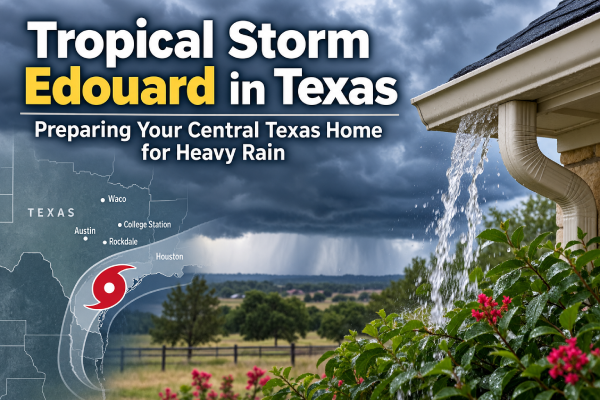
  • Tropical Storm Edouard in Texas: Preparing Your Central Texas Home for Heavy Rain

    Tropical Storm Edouard in Texas: Preparing Your Central Texas Home for Heavy Rain

    Living in Central Texas, we know that tropical storms don’t necessarily have to come directly through our communities to affect us.

    Tropical Storm Edouard is moving toward the Texas and Louisiana Gulf Coast, bringing heavy rainfall and the possibility of flooding to portions of the state. Here in Central Texas, we’re farther from the center of the storm, but moisture from Edouard is expected to increase our chances for showers and thunderstorms over the next several days.

    For those of us in Milam County and the surrounding area, this is a good opportunity to take a few simple precautions around the house before the rain arrives.

    Tropical Storm Edouard Could Bring Rain to Central Texas

    The National Weather Service expects the remnants of Edouard to move inland and increase rain chances across Central Texas Wednesday and Thursday.

    The greatest rainfall is expected farther southeast toward the Brazos Valley, where localized heavier rainfall and flash flooding are possible.

    That doesn’t mean Milam County is expecting hurricane conditions.

    It does mean we could see thunderstorms and periods of heavier rain, and that’s enough reason to look around the house and take care of a few things beforehand.

    Take a Look at Your Gutters

    We don’t think much about gutters when it hasn’t rained in a while.

    Unfortunately, that’s also when leaves, twigs and other debris can accumulate.

    When heavy rain finally arrives, clogged gutters can overflow and dump water where you don’t want it—against siding, around windows or near the foundation.

    If your gutters are safely accessible, check them and remove accumulated debris before the rain.

    If cleaning them requires climbing onto a roof or putting yourself in an unsafe position, get some help instead.

    Check Where Water Goes Around Your House

    Take a walk around your home and look at the ground.

    Does it slope away from the house, or are there low spots where water collects next to the foundation?

    Are drainage areas blocked with leaves, grass clippings or other debris?

    Heavy rain has a way of showing us drainage problems we didn’t know we had.

    You may not be able to solve a major drainage problem before a storm arrives, but clearing an obvious obstruction can sometimes prevent a much larger mess.

    Secure Things That Can Blow Around

    Thunderstorms can produce strong, gusty winds even when a tropical storm itself isn’t passing directly over us.

    Look around the porch, patio and yard for lightweight objects that could blow away.

    Lawn chairs, empty flowerpots, trash cans, decorations and lightweight tools can become a problem when the wind picks up.

    Putting them somewhere secure takes only a few minutes.

    Look for Signs of an Existing Roof Leak

    If you’ve noticed a ceiling stain or evidence of a small roof leak, don’t forget about it simply because the weather has been dry.

    A small leak can become much more noticeable when several rounds of rain move through.

    You don’t necessarily want to start climbing onto a roof immediately before a storm. Instead, inspect what you can safely see from the ground and from inside the house.

    If you already know there’s a problem, now is the time to make plans to have it checked.

    Prepare for the Possibility of a Power Outage

    Thunderstorms occasionally bring power outages with them.

    Make sure flashlights are somewhere you can actually find them and check that they work. Charge phones and other necessary devices ahead of the weather.

    If someone in the household depends on electrically powered medical equipment, have a plan for what you’ll do if electricity is interrupted.

    That’s particularly important for families caring for an older adult at home.

    Check on Elderly Family Members and Neighbors

    Storm preparation isn’t only about the house.

    If you have an elderly parent, relative or neighbor living alone, give them a call.

    Make sure they know weather is coming and ask whether they need anything beforehand. Check that they have necessary medications, food and drinking water and that someone will be available if they need assistance.

    If heavy rain does occur, it’s much better to have these things taken care of before roads become difficult to travel.

    Never Take a Chance With Flooded Roads

    One of the most important storm-safety rules has very little to do with maintaining your house.

    Don’t drive through flooded roadways.

    Water covering a road can be deeper or moving faster than it appears, and the roadway underneath may have been damaged.

    If you encounter water across the road, turn around and find another route.

    No appointment, errand or household project is worth risking your life to get there.

    A Little Preparation Before the Rain

    At Driscoll Home Services, we spend a lot of time taking care of homes throughout West Milam County and the surrounding Central Texas area.

    One thing we’ve learned is that the best time to deal with many household problems is before they become emergencies.

    Tropical Storm Edouard may be primarily a Gulf Coast weather event, but its moisture is expected to reach farther inland and increase our chances of rain here in Central Texas.

    So take a few minutes to check the gutters, look at the drainage around your house, secure loose outdoor items, charge your phone and check on the people around you.

    We may simply end up getting some much-needed rain.

    But when Texas weather is involved, being prepared is rarely wasted effort.

  • Milam County EMS: New Cameron Station Will Strengthen Local Emergency Services

    Milam County EMS: New Cameron Station Will Strengthen Local Emergency Services

    Good news is coming to Milam County as construction gets underway on a new EMS station in Cameron.

    The new facility will give Milam County EMS a purpose-built location for emergency medical services. And it represents an important investment in the people who live throughout our county.

    Construction began in August, with completion expected in April 2027. The approximately 10,000-square-foot facility will provide space for two ambulances along with training and administrative operations.

    For those of us who live in Milam County, this is more than simply another new building. Emergency medical services are something most of us hope we’ll never need—but when we do need them, every minute matters.

    A New Home for Milam County EMS in Cameron

    Milam County ESD No. 1 provides emergency medical services throughout the county, with ambulances operating from Rockdale, Cameron, Thorndale and Milano.

    The new Cameron EMS station will provide a facility specifically designed around the needs of emergency medical personnel and their equipment.

    That’s particularly significant in a rural county like ours. Our communities are spread across a large geographic area, and emergency responders may have considerable distances to travel when someone calls for help.

    Investing in emergency medical infrastructure helps give the people providing those services the facilities and resources they need to do their jobs.

    Emergency Preparedness Begins at Home

    A new EMS station is certainly good news, but there are also things each of us can do at home to make an emergency response a little easier.

    One of the simplest is making sure your house number is clearly visible from the road.

    Think about whether an ambulance driver who has never been to your home could find it quickly—at night, in bad weather, or when approaching from an unfamiliar direction.

    If your address numbers are faded, hidden behind vegetation, too small to see from the road or missing altogether, this is a good time to fix that.

    Those few minutes spent replacing an address sign could become very important someday.

    Keep Driveways and Entrances Accessible

    This is particularly important for those of us living outside town.

    Rural properties can have long driveways, gates, cattle guards, low tree limbs or other obstacles between the road and the house.

    Take an occasional look at your property from the perspective of an emergency responder.

    Could an ambulance get down your driveway?

    Are tree limbs or brush obstructing the entrance?

    Would someone unfamiliar with the property know which house or building they’re trying to reach?

    Keeping entrances and driveways reasonably accessible isn’t just routine property maintenance. It can also help emergency personnel reach you when time matters.

    Seniors Can Benefit From a Simple Emergency Information List

    Families with an older adult living at home might want to take one additional step.

    Prepare a simple emergency information sheet and keep it somewhere easy to find.

    It might include the person’s name, emergency contacts, doctors, current medications, allergies and other important information that emergency medical personnel may need.

    Make sure the information stays current.

    If Mom’s medication changed six months ago but the emergency list still shows the old prescription, the list isn’t nearly as useful as it could be.

    This is also something adult children can help elderly parents or relatives prepare.

    Make Sure Someone Knows How to Reach You

    Emergency preparedness doesn’t have to be complicated.

    Keep emergency contact numbers current. Make sure family members know the property’s physical address. If you live somewhere that’s difficult to locate, be prepared to give a 911 dispatcher clear information about how to reach the property.

    And if an elderly relative lives alone, have a plan for checking on them.

    Sometimes the most useful emergency preparations are also the simplest.

    An Important Investment in Milam County

    The construction of the new Cameron EMS station is something worth celebrating.

    As Milam County continues to grow and change, maintaining strong emergency services will remain important for families in Cameron, Rockdale, Thorndale, Milano and the rural communities in between.

    At Driscoll Home Services, we spend much of our time helping people take care of their homes and, through Carol’s Senior Care, helping older members of our community remain comfortable and independent in their own homes.

    The announcement of the new Milam County EMS facility is also a good reminder that taking care of a home includes being prepared for the unexpected.

    Take a few minutes this week to look at your house numbers, driveway and emergency information.

    Hopefully, you’ll never need an ambulance to come to your home.

    But if that day ever comes, a little preparation beforehand can help make an already difficult situation just a little easier.

  • Texas Wildfire Preparedness: Protecting Your Home and Property

    Texas Wildfire Preparedness: Protecting Your Home and Property

    As we recently discussed in our article about the Milam County burn ban, Central Texas has been dealing with some brutally hot and dry weather lately. And those conditions don’t just make it uncomfortable to be outside. They can also increase the danger of wildfires.

    The Texas A&M Forest Service reported that on August 25 it had received 17 requests for assistance on wildfires that burned more than 52,000 acres across Texas. The state’s wildfire preparedness level is currently at Level 3.

    The National Weather Service has also warned that extreme heat, low humidity and dry vegetation can create conditions where fires start easily and spread quickly.

    Wildfire Danger in Central Texas Is Increasing

    Here in Milam County, we’re still experiencing very hot weather. Cameron and Rockdale are under a Heat Advisory today, August 26, with temperatures around 104 degrees and heat-index values potentially reaching 107.

    With conditions like these, this is a good time to take another walk around our homes and properties and look for some of the little things that could make a big difference if a fire were to occur.

    Start Close to Your House

    When we think about wildfire, we tend to picture a huge wall of flames moving across the countryside. But protecting your home starts much closer to the house.

    Take a look around your porch, deck, garage and other structures. Dry leaves, dead grass, pine needles, small branches and other debris can accumulate without us giving them much thought.

    Cleaning up these materials reduces some of the fuel available to a fire.

    Don’t forget to look under porches and decks, around fences and beside storage buildings. These are easy places for leaves and other dry material to collect.

    Take a Look at Your Gutters

    Gutters are another place we don’t always think about.

    Leaves and debris that have been sitting in a gutter for weeks can become extremely dry during a Central Texas summer. If your gutters are accessible and can be cleaned safely, keeping them free of accumulated debris is another simple step you can take around your home.

    If reaching your gutters requires climbing or working from an unsafe position, however, it’s better to get some help than risk a fall.

    Be Extra Careful With Mowers and Outdoor Equipment

    Something as ordinary as mowing deserves a little more thought when everything is extremely dry.

    Mowers, tractors, chains dragging from trailers, power tools and other equipment can potentially create heat or sparks. The National Weather Service has warned that under current dry conditions, a fire that starts can spread rapidly and become difficult to control.

    If the grass and vegetation are extremely dry, consider whether an outdoor job really needs to be done right then.

    Sometimes the safest home-maintenance decision is simply to wait for better conditions.

    Move Combustible Materials Away From Buildings

    Take a look at what you have stored against the house, garage or other buildings.

    Firewood, cardboard boxes, dead vegetation and other combustible materials don’t need to be sitting directly against a structure.

    You don’t have to completely reorganize your property, but creating some separation between easily burned materials and your home can help reduce unnecessary risk.

    The Texas A&M Forest Service provides specific resources to help homeowners evaluate wildfire risks around their homes and prepare their properties.

    Make Sure You Can Find Your Garden Hoses

    This may sound almost too simple, but make sure your outdoor hoses are connected, usable and easy to reach.

    This doesn’t mean you should attempt to fight a wildfire yourself. If you see a wildfire, get to a safe location and call 911. The Texas A&M Forest Service specifically advises people not to approach a wildfire in an attempt to put it out themselves.

    Having working outdoor water sources is simply part of keeping your property prepared and maintained.

    Have a Plan Before You Need One

    Wildfires can move surprisingly fast.

    The massive Ross Fire burning in Palo Pinto and Jack counties this week is a sobering example. The fire grew from a small reported fire to tens of thousands of acres, damaging property and forcing evacuations.

    You don’t have to live next door to that fire for there to be a lesson in it.

    Think about what you would do if a wildfire threatened your own neighborhood. Know how you would leave your property and where you would go. Keep important medications, identification and other necessities somewhere you can access quickly.

    And if you have an elderly family member or neighbor living nearby, include them in your plans.

    Would they be able to leave quickly on their own? Would someone need to pick them up? Do they have medications or mobility equipment that would need to go with them?

    Those questions are much easier to answer before an emergency begins.

    Protecting Our Homes Means Paying Attention

    At Driscoll Home Services, we spend a lot of time working in and around homes throughout West Milam County and the surrounding Central Texas area. One thing we’ve learned is that many serious household problems start as something small that was easy to overlook.

    Wildfire preparation isn’t about becoming frightened every time the weather turns hot and dry. It’s about paying attention.

    Clean up the dry leaves. Check the gutters. Move combustible materials away from the house. Be careful with outdoor equipment. Know where your pets are. Check on elderly neighbors and family members. And have an idea of what you’ll do if conditions suddenly change.

    None of these things takes away the wildfire risk completely.

    But when Central Texas is this hot and dry, a little preparation today may make a very big difference tomorrow.

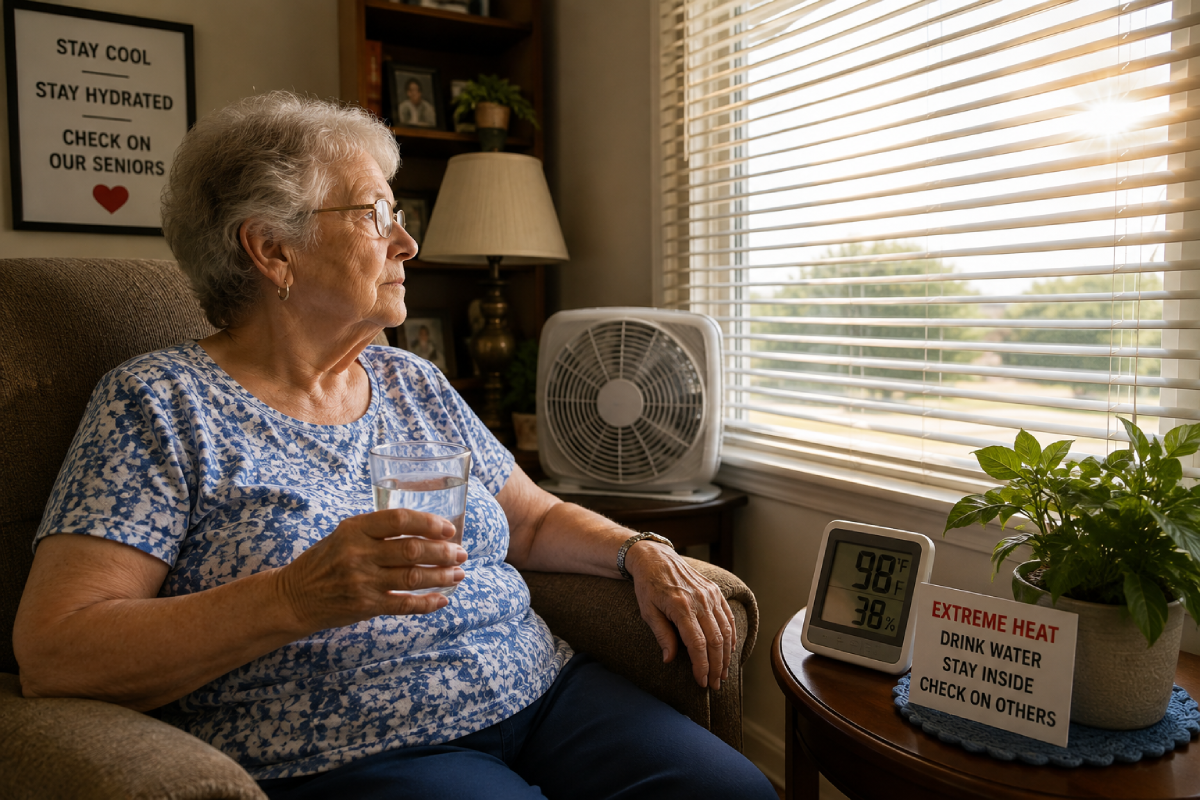
  • Extreme Heat in Milam County: Checking on Seniors and Keeping Your Home Safe

    Extreme Heat in Milam County: Checking on Seniors and Keeping Your Home Safe

    Here in Central Texas, we’re certainly no strangers to hot summers. But there comes a point when the heat goes beyond simply being uncomfortable and becomes dangerous.

    Milam County, including Rockdale and Cameron, is under an Extreme Heat Warning today, August 23, with the National Weather Service warning of dangerously hot conditions. The heat is expected to continue into the coming week, making this an especially important time to check on our homes, ourselves, and the people around us.

    Check on the Seniors in Your Life

    One of the first things that comes to my mind during extremely hot weather is our senior citizens.

    Many of us have an older parent, relative, friend, or neighbor living alone. During periods of extreme heat, it only takes a phone call or a quick visit to make sure they’re doing all right.

    Ask whether their air conditioner is working properly and whether the house feels comfortably cool. Make sure they have something available to drink and aren’t spending unnecessary time outside during the hottest part of the day.

    The National Weather Service specifically recommends checking on relatives and neighbors during extreme heat.

    Sometimes a simple “Are you doing okay?” can be more important than we realize.

    Keep the House as Cool as Possible

    Your air conditioner has a difficult job when Central Texas temperatures climb this high.

    Closing blinds or curtains against direct sunlight can help reduce some of the heat entering the house. Avoid unnecessarily heating the house during the hottest part of the afternoon, and make sure air-conditioning vents aren’t blocked by furniture or other items.

    If you notice that your air conditioner isn’t cooling the house normally, don’t ignore it and hope the problem will go away. During extreme heat, a cooling problem can quickly become much more serious, particularly in a home occupied by an older adult.

    Save Outdoor Work for a Cooler Time

    There will always be grass to mow, something that needs repairing, or another outdoor job waiting for us. On days like these, some of those jobs can wait.

    If outdoor work has to be done, try to schedule it for early in the morning or later in the evening rather than during the hottest part of the afternoon. Take frequent breaks, get into the shade or air conditioning when possible, and drink plenty of water.

    The National Weather Service advises limiting strenuous outdoor activity and notes that the hottest portion of the day is typically from about 2 p.m. to 7 p.m. during this extreme heat event.

    Know When the Heat Is Becoming Dangerous

    It’s important to recognize when someone may be experiencing more than ordinary discomfort from the heat.

    Heat exhaustion can cause heavy sweating, weakness or tiredness, dizziness, headache, nausea and other symptoms. A person experiencing these symptoms should be moved to a cooler environment and monitored carefully.

    Heat stroke is much more serious. Confusion, loss of consciousness and an extremely high body temperature are among its warning signs. Heat stroke is a medical emergency and requires immediate emergency assistance.

    Knowing the difference can be especially important when you’re checking on an elderly family member, friend or neighbor.

    Don’t Forget About Pets

    Our pets depend on us during extreme weather too.

    Make sure outdoor animals have plenty of fresh water and access to shade. Avoid leaving pets outside unnecessarily during the hottest part of the day, and never leave a pet—or a person—in a parked vehicle.

    Vehicle temperatures can rise to dangerous levels very quickly, even when you only intend to be gone for a short time. The National Weather Service specifically warns against leaving children or pets in an enclosed vehicle during extreme heat.

    A Little Extra Attention Can Make a Difference

    Extreme heat is part of living in Central Texas, but that doesn’t mean we should become careless about it.

    At Driscoll Home Services, much of what we do revolves around helping people remain comfortable and safe in their homes. Through Carol’s Senior Care, that is especially true when it comes to helping older adults with some of the everyday things that can become more difficult as we age.

    During this period of extreme heat in Milam County, take a few minutes to check your home, check on your pets, and most importantly, check on the people in your life who may need a little extra help.

    Sometimes something as simple as a phone call, a glass of water, closing a curtain, or noticing that an air conditioner isn’t working properly can prevent a much bigger problem.

    And in weather like this, looking out for one another is simply the neighborly thing to do.

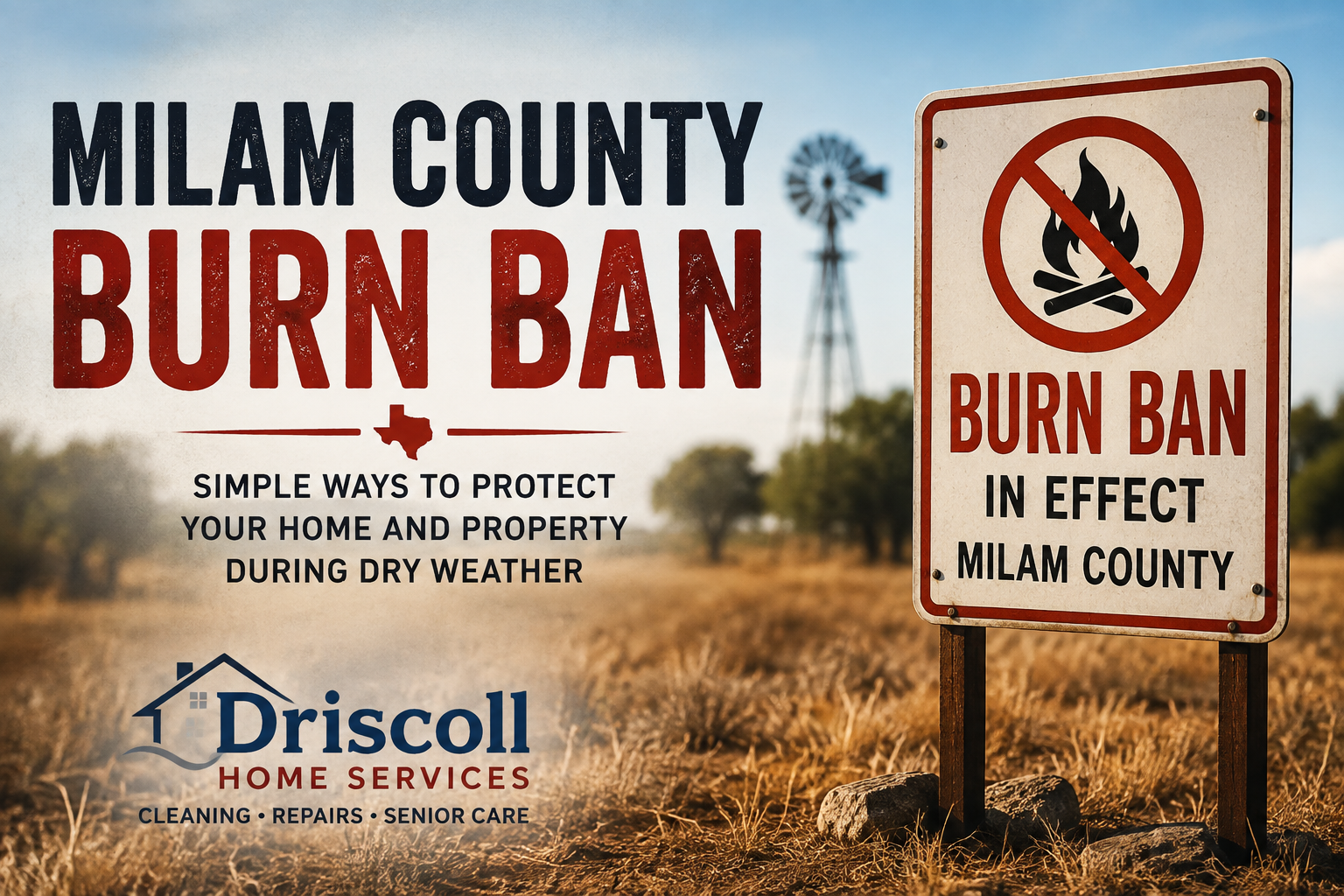
  • Milam County Burn Ban: Protecting Your Home and Property During Dry Weather

    Milam County Burn Ban: Protecting Your Home and Property During Dry Weather

    The hot, dry days of a Central Texas summer can quickly turn ordinary grass, brush, and other vegetation into a fire hazard. With the Milam County burn ban in effect, this is a good time for all of us to take a closer look around our homes and properties and think about some simple ways we can reduce the risk of fire.

    Recent conditions across the Brazos Valley have included high temperatures, dry vegetation, and periods of wind that can allow a small spark to become a much larger problem. Milam County is among the counties that have been under burn restrictions during these dry conditions.

    What the Milam County Burn Ban Means

    While a burn ban is in effect, residents need to follow the current restrictions on outdoor burning. Conditions and restrictions can change, so it is always a good idea to check with Texas A&M Forest Service for the latest information before doing any outdoor burning.

    The important thing to remember is that a fire doesn’t necessarily have to start with someone intentionally burning a brush pile. When the ground and vegetation are extremely dry, sparks and heat from everyday outdoor activities can sometimes start a fire.

    Take a Walk Around Your Property

    One of the simplest things you can do is walk around your home and look for areas where dry material has accumulated.

    Dry leaves, dead grass, fallen branches, brush, and other debris can provide fuel for a fire. Pay particular attention to material that has accumulated close to the house, garage, storage buildings, fences, porches, or decks.

    Keeping the area around your home maintained doesn’t eliminate the possibility of a fire, but removing unnecessary dry material can reduce potential fuel around your property.

    Be Careful With Outdoor Equipment

    Outdoor equipment also deserves some extra attention during extremely dry weather.

    Lawn equipment, power tools, vehicles, trailers, and other machinery can sometimes produce heat or sparks. KBTX reported that residents were being urged to use extreme caution with equipment capable of producing sparks during the area’s elevated fire danger.

    It’s also important to avoid parking a hot vehicle over tall, dry grass. Something that seems harmless under normal conditions deserves a little more thought when weeks of hot weather have left vegetation extremely dry.

    Don’t Forget the Little Things

    Fire prevention often comes down to paying attention to small things.

    Keep dry leaves and debris away from buildings. Pick up fallen limbs and brush when practical. Be careful with anything outdoors that produces heat or sparks. Make sure cigarettes and other smoking materials are completely extinguished and properly disposed of.

    And, of course, follow all local burn-ban restrictions.

    These aren’t complicated precautions, but during a period of high fire danger, a little extra care can make a big difference.

    Central Texas Dry Weather Requires Extra Caution

    Living in Central Texas means dealing with periods of extreme heat and very little rain. Recent forecasts have continued to point toward hot and dry conditions in the region, making fire awareness particularly important.

    At Driscoll Home Services, we spend a lot of time working in and around people’s homes and properties throughout West Milam County and the surrounding area. We believe taking care of a home isn’t only about fixing something after it breaks or cleaning something after it gets dirty. Sometimes it is simply noticing a potential problem and taking care of it before it becomes a much bigger one.

    The Milam County burn ban is a good reminder for all of us to look around our properties, clean up what we can, be careful with outdoor activities, and do our part to help protect our homes and our neighbors.

    Burn-ban conditions and restrictions can change. Always check current Milam County information and follow instructions from local authorities before conducting any outdoor burning.