If you had to call 911 today, would the paramedics know what medications you take? Would they know about your allergies or medical conditions? What if you were unable to answer their questions?
An emergency information sheet for seniors can provide those answers when you can’t.
It is a simple thing to prepare. But during an emergency, it could save valuable time.
Put Important Information in One Place
In an emergency, you may be frightened, confused, injured, or unconscious. A family member who normally knows your medical information may not be there.
That is why it is a good idea to have important information written down ahead of time.
Texas Ready recommends that older adults have a special contact sheet with medical and emergency information. This includes medications and dosages, allergies, health conditions, emergency contacts, and medical providers. It can also include information about medical equipment and special needs.
What Should Be on Your Emergency Information Sheet?
Keep the information simple and easy to read.
Consider including:
- Your full name
- Date of birth
- Home address
- Phone number
- Emergency contacts and their relationship to you
- Primary doctor’s name and phone number
- Pharmacy name and phone number
- Major medical conditions
- Current medications and dosages
- Medication allergies
- Other serious allergies
- Medical equipment you use, such as oxygen
- Mobility needs, such as a walker or wheelchair
- Hearing, vision, or communication difficulties
- Preferred hospital, if you have one
- Important information about an advance directive or DNR, including where the actual document can be found
If you have a medical condition that emergency personnel need to know about immediately, make sure it is easy to see on the page.
Where Should You Keep It?
The refrigerator is a good place.
This isn’t just a convenient household suggestion. Some emergency services specifically recommend it.
The West Central Texas Council of Governments Regional 9-1-1 Program recommends keeping medical history, doctors’ phone numbers, and emergency contacts on the refrigerator in an envelope marked “EMERGENCY INFORMATION.”
Some fire departments also participate in programs known as File of Life. These programs use a clearly marked medical information form that is kept on the refrigerator.
The reason is simple: emergency responders need to be able to find the information quickly.
Don’t put your emergency sheet in a desk drawer underneath five years of receipts and expect someone to know it’s there!
Make It Easy to Recognize
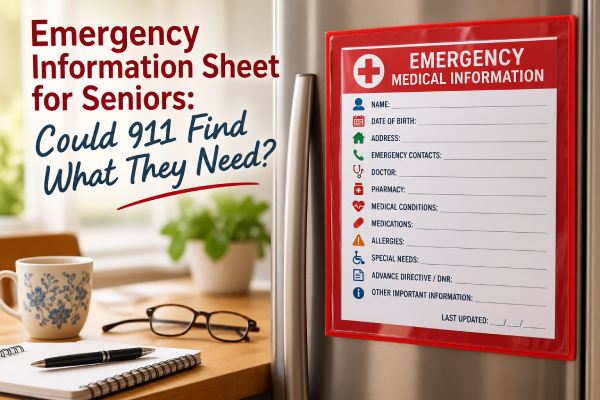
Put the sheet in a brightly colored envelope or clear plastic sleeve.
Label it clearly:
EMERGENCY MEDICAL INFORMATION
Then place it prominently on the refrigerator.
You may also want to tell family members, caregivers, and other people who regularly visit your home where it is located.
Don’t Forget the Date
Put a Last Updated date at the bottom of your emergency information sheet.
This is important.
Medications change. Dosages change. Doctors change. Phone numbers change.
An outdated medication list could cause confusion during an emergency.
Review the page regularly. You should also update it whenever there is an important change in your medical information.
What NOT to Put on the Sheet
Remember that this information will be kept somewhere easy to find.
That means you should be careful about including information that an emergency responder doesn’t need.
Do not put your Social Security number on a sheet displayed on your refrigerator. Texas Ready recommends keeping Social Security numbers separate from other emergency information for identity security.
I would also avoid putting the following on an openly displayed sheet:
- Bank account information
- Credit or debit card numbers
- Passwords or PIN numbers
- Online account information
- Copies of financial documents
- Other sensitive information that isn’t needed for emergency medical care
The purpose of this sheet is to help emergency personnel care for you. It isn’t meant to contain your entire personal record.
Don’t Let It Become Outdated
One of the biggest mistakes you can make is creating an emergency sheet and then forgetting about it.
If you stopped taking a medication two years ago, it shouldn’t still be listed as a current medication.
If your emergency contact changed phone numbers, update it.
If you develop a new allergy, add it.
A simple reminder on your calendar every few months can help you remember to check the page.
Don’t Hide It
An emergency information sheet won’t be very helpful if nobody can find it.
Don’t put your only copy in a locked safe, filing cabinet, computer, or another place that emergency personnel wouldn’t know to check.
Keep the basic emergency medical information where it can be found quickly.
More sensitive documents can still be stored securely elsewhere.
One More Thing: Make Sure 911 Can Find Your House
Having your medical information ready is important. But emergency responders first have to find you.
The West Central Texas Regional 9-1-1 Program recommends making your address clearly visible on your property and home. Reflective numbers can make an address easier to see at night.
For those of us who live in rural areas, this can be especially important.
Take a look at your house number from the road. Could an ambulance driver who has never been to your home spot it quickly, especially after dark?
If not, that’s another simple safety project worth doing.
A Little Preparation Can Make a Big Difference
Hopefully, your emergency information sheet will sit on your refrigerator for years without ever being needed.
That’s the best outcome.
But emergencies don’t give us time to get organized.
Taking a few minutes now to write down your medications, medical conditions, allergies, doctors, and emergency contacts can give first responders valuable information when every minute matters.
And once you’ve made the sheet, tell someone you trust where it is.
It’s a small job that can provide a lot of peace of mind.