

home

Driscoll Home Services Blog

Introduction ︾

  • Dogtown Ranch in Rockdale Closes After All 82 Dogs Are Surrendered

    Dogtown Ranch in Rockdale Closes After All 82 Dogs Are Surrendered

    A story that has drawn attention throughout Milam County has reached a major turning point. Dogtown Ranch Rockdale Texas is now empty after all 82 dogs at the property were voluntarily surrendered.

    Dogtown Ranch Sanctuary Rescue and Rehab, located outside Rockdale, has also agreed to close. A horse that remained on the property was removed as well.

    The surrender followed a weeklong effort involving the Milam County Sheriff’s Office and Brandywine Valley SPCA.

    All 82 Dogs Have Been Removed

    Brandywine Valley SPCA sent more than a dozen staff members to Texas to help with the large rescue effort.

    The team worked with the Milam County Sheriff’s Office to gain access to the property. They assessed the dogs, provided care and helped arrange transportation.

    All 82 dogs were eventually surrendered.

    As of October 6, no animals remained at Dogtown Ranch.

    Some of the dogs have already been transported to Brandywine Valley SPCA locations in Pennsylvania. Others are being moved to partner shelters and rescue organizations.

    The goal is to provide medical care and eventually find homes for the dogs.

    Dogtown Ranch Owner Charged

    The Milam County Sheriff’s Office also announced another major development in the case.

    Dogtown Ranch owner and operator Angela Sera was arrested October 6. She faces one charge of cruelty to non-livestock animals, a Class A misdemeanor.

    The charge involves a senior mixed-breed dog named Baby Reina.

    According to authorities, new veterinary findings were obtained after Baby Reina was surrendered.

    The Milam County Sheriff’s Office said the veterinary report documented several health problems. These included dehydration, parasites and malnutrition.

    Earlier inspections of Dogtown Ranch had not resulted in criminal charges.

    The new veterinary findings involving Baby Reina led authorities to pursue the current charge.

    The case will now proceed through the court system.

    It is important to remember that a criminal charge is an allegation. Sera is presumed innocent unless and until proven guilty in court.

    Baby Reina Is Receiving Care

    Brandywine Valley SPCA reported that Baby Reina was in serious condition when its team encountered her.

    She was taken to an emergency veterinarian for treatment.

    There is some encouraging news.

    Baby Reina has since been released from the hospital and remains in the care of Brandywine Valley SPCA.

    A Major Rescue Effort

    Moving and caring for 82 dogs is a significant undertaking.

    The Brandywine Valley SPCA team has been providing medical evaluations, transportation, temporary shelter and other care for the animals.

    The organization says some of the dogs will eventually become available for adoption.

    For the people in and around Rockdale who have followed the Dogtown Ranch story, the removal of the final animals marks an important development.

    Whatever happens next in the court case, the immediate situation for the animals has changed.

    The ranch is empty.

    The dogs are receiving care.

    And the process of finding them new homes has begun.

    A Milam County Story We’ll Continue to Follow

    Dogtown Ranch has received considerable attention both inside and outside Milam County.

    The closure of the facility and surrender of all 82 dogs represents a major change in a story that has concerned many people in our community.

    The criminal case is now in the hands of the court system. We will leave the determination of guilt or innocence where it belongs — with that process.

    For now, the good news is that the animals have been removed and are receiving care.

    Driscoll Home Services shares Central Texas News that may be important to our customers, neighbors and communities throughout Milam County and the surrounding area.


  • Emergency Information Sheet for Seniors: Could 911 Find What They Need?

    Emergency Information Sheet for Seniors: Could 911 Find What They Need?

    If you had to call 911 today, would the paramedics know what medications you take? Would they know about your allergies or medical conditions? What if you were unable to answer their questions?

    An emergency information sheet for seniors can provide those answers when you can’t.

    It is a simple thing to prepare. But during an emergency, it could save valuable time.

    Put Important Information in One Place

    In an emergency, you may be frightened, confused, injured, or unconscious. A family member who normally knows your medical information may not be there.

    That is why it is a good idea to have important information written down ahead of time.

    Texas Ready recommends that older adults have a special contact sheet with medical and emergency information. This includes medications and dosages, allergies, health conditions, emergency contacts, and medical providers. It can also include information about medical equipment and special needs.

    What Should Be on Your Emergency Information Sheet?

    Keep the information simple and easy to read.

    Consider including:

    • Your full name
    • Date of birth
    • Home address
    • Phone number
    • Emergency contacts and their relationship to you
    • Primary doctor’s name and phone number
    • Pharmacy name and phone number
    • Major medical conditions
    • Current medications and dosages
    • Medication allergies
    • Other serious allergies
    • Medical equipment you use, such as oxygen
    • Mobility needs, such as a walker or wheelchair
    • Hearing, vision, or communication difficulties
    • Preferred hospital, if you have one
    • Important information about an advance directive or DNR, including where the actual document can be found

    If you have a medical condition that emergency personnel need to know about immediately, make sure it is easy to see on the page.

    Where Should You Keep It?

    The refrigerator is a good place.

    This isn’t just a convenient household suggestion. Some emergency services specifically recommend it.

    The West Central Texas Council of Governments Regional 9-1-1 Program recommends keeping medical history, doctors’ phone numbers, and emergency contacts on the refrigerator in an envelope marked “EMERGENCY INFORMATION.”

    Some fire departments also participate in programs known as File of Life. These programs use a clearly marked medical information form that is kept on the refrigerator.

    The reason is simple: emergency responders need to be able to find the information quickly.

    Don’t put your emergency sheet in a desk drawer underneath five years of receipts and expect someone to know it’s there!

    Make It Easy to Recognize

    Put the sheet in a brightly colored envelope or clear plastic sleeve.

    Label it clearly:

    EMERGENCY MEDICAL INFORMATION

    Then place it prominently on the refrigerator.

    You may also want to tell family members, caregivers, and other people who regularly visit your home where it is located.

    Don’t Forget the Date

    Put a Last Updated date at the bottom of your emergency information sheet.

    This is important.

    Medications change. Dosages change. Doctors change. Phone numbers change.

    An outdated medication list could cause confusion during an emergency.

    Review the page regularly. You should also update it whenever there is an important change in your medical information.

    What NOT to Put on the Sheet

    Remember that this information will be kept somewhere easy to find.

    That means you should be careful about including information that an emergency responder doesn’t need.

    Do not put your Social Security number on a sheet displayed on your refrigerator. Texas Ready recommends keeping Social Security numbers separate from other emergency information for identity security.

    I would also avoid putting the following on an openly displayed sheet:

    • Bank account information
    • Credit or debit card numbers
    • Passwords or PIN numbers
    • Online account information
    • Copies of financial documents
    • Other sensitive information that isn’t needed for emergency medical care

    The purpose of this sheet is to help emergency personnel care for you. It isn’t meant to contain your entire personal record.

    Don’t Let It Become Outdated

    One of the biggest mistakes you can make is creating an emergency sheet and then forgetting about it.

    If you stopped taking a medication two years ago, it shouldn’t still be listed as a current medication.

    If your emergency contact changed phone numbers, update it.

    If you develop a new allergy, add it.

    A simple reminder on your calendar every few months can help you remember to check the page.

    Don’t Hide It

    An emergency information sheet won’t be very helpful if nobody can find it.

    Don’t put your only copy in a locked safe, filing cabinet, computer, or another place that emergency personnel wouldn’t know to check.

    Keep the basic emergency medical information where it can be found quickly.

    More sensitive documents can still be stored securely elsewhere.

    One More Thing: Make Sure 911 Can Find Your House

    Having your medical information ready is important. But emergency responders first have to find you.

    The West Central Texas Regional 9-1-1 Program recommends making your address clearly visible on your property and home. Reflective numbers can make an address easier to see at night.

    For those of us who live in rural areas, this can be especially important.

    Take a look at your house number from the road. Could an ambulance driver who has never been to your home spot it quickly, especially after dark?

    If not, that’s another simple safety project worth doing.

    A Little Preparation Can Make a Big Difference

    Hopefully, your emergency information sheet will sit on your refrigerator for years without ever being needed.

    That’s the best outcome.

    But emergencies don’t give us time to get organized.

    Taking a few minutes now to write down your medications, medical conditions, allergies, doctors, and emergency contacts can give first responders valuable information when every minute matters.

    And once you’ve made the sheet, tell someone you trust where it is.

    It’s a small job that can provide a lot of peace of mind.

    Elderly shower safely

    Carol’s Senior Care

  • Cameron Nuclear Waste Demonstration: What Milam County Residents Should Know

    Cameron Nuclear Waste Demonstration: What Milam County Residents Should Know

    A Cameron nuclear waste demonstration is moving forward after receiving a Texas drilling permit.

    That headline may sound alarming at first. But there is an important fact Milam County residents should know.

    No radioactive material will be used in the Cameron demonstration.

    The project will test technology that could eventually be used to dispose of nuclear waste deep underground. For now, the Cameron site is being used to test how the system works.

    What Happened?

    On October 1, Deep Isolation announced that the Texas Railroad Commission had issued a drilling permit for its project near Cameron.

    The permit allows the project to move beyond engineering and design. Site preparation, construction, drilling, and field testing can now move forward.

    The project is located at the Deep Borehole Demonstration Center near Cameron.

    Deep Isolation began the multi-year demonstration program there in January 2026.

    Is Nuclear Waste Being Brought to Cameron?

    This is probably the biggest question local residents will have.

    According to Deep Isolation, no radioactive material will be used during this demonstration.

    The project will use non-radioactive materials to test equipment and procedures at full scale.

    That distinction is important.

    The Cameron project is testing technology designed for nuclear waste disposal. It is not currently operating as a nuclear waste disposal site.

    What Is Deep Borehole Disposal?

    Deep Isolation is developing a method for placing spent nuclear fuel and other high-level radioactive waste deep underground.

    The basic idea involves drilling a deep borehole into suitable rock formations.

    Specially designed canisters could eventually be placed deep inside those boreholes. The goal would be to isolate radioactive waste far below the surface.

    The Cameron project is intended to find out how well the equipment and procedures work under real-world conditions.

    What Will They Test Near Cameron?

    The project is designed to test much more than drilling a hole.

    Deep Isolation says the demonstration will include drilling a deep borehole in geology similar to what could be used at a future disposal site.

    Workers will also test a full-size canister system.

    The canister will be placed into the borehole and later retrieved. Surface equipment and handling procedures will also be tested.

    The company says the demonstration will eventually test the entire process. That includes moving a canister from the surface into the borehole and retrieving it again.

    All of this will be done without radioactive material.

    Why Cameron?

    The demonstration is being conducted at the Deep Borehole Demonstration Center near Cameron.

    The site is associated with Halliburton’s Drilling Technology Facility. That gives the project access to drilling expertise and equipment.

    Several companies and organizations are involved in the project.

    Deep Isolation is working with the Deep Borehole Demonstration Center, Halliburton, Amentum, NAC International, and Occlusion Nuclear Solutions.

    The project combines technology from the drilling industry with equipment designed for handling nuclear materials.

    What Does the Drilling Permit Mean?

    The drilling permit is an important step for the project.

    It does not mean that radioactive nuclear waste has been approved for disposal near Cameron.

    Instead, the permit allows the demonstration project to move forward with drilling and related field work.

    Deep Isolation says the testing will provide engineering information and practical experience.

    That information could later be used as the company works toward possible commercial projects.

    Those future projects would involve their own regulatory requirements.

    Why Test the Technology at Full Scale?

    Something can work well on paper or in a laboratory and still face challenges in the real world.

    That is why full-scale demonstrations can be important.

    Workers need to know whether equipment can safely handle a full-size canister. They also need to know whether it can be placed deep underground and retrieved.

    The project can help engineers identify problems before the technology is considered for actual radioactive waste.

    Deep Isolation previously conducted a smaller demonstration in 2019.

    During that test, a prototype canister was lowered about 2,000 feet vertically. It was then moved more than 400 feet into a horizontal section of a borehole.

    The canister was later retrieved.

    The Cameron project takes that testing to a much larger scale.

    What Should Milam County Residents Watch?

    The project is still developing.

    Residents may want to follow the drilling and construction work as it progresses.

    It will also be important to watch for any future regulatory proposals involving radioactive material.

    For now, however, the Cameron project is a non-radioactive technology demonstration.

    That is an important distinction when discussing the project with neighbors or seeing headlines about nuclear waste technology being tested in Milam County.

    Another Big Project Comes to Milam County

    Milam County has attracted several large and unusual projects in recent years.

    We have seen cryptocurrency mining around Rockdale. Large data centers and artificial intelligence projects are also being developed in the county.

    Now Cameron is home to a full-scale demonstration of technology intended for nuclear waste disposal.

    These projects can bring investment and new technology to our area. They can also bring questions from the people who live nearby.

    Those questions deserve clear answers.

    At Driscoll Home Services, we try to keep up with developments that could affect the communities we serve. We’ll continue watching this project as it moves forward and share important developments with our Milam County neighbors.

  • Milam County Senior Expo Coming to Cameron October 8

    Milam County Senior Expo Coming to Cameron October 8

    The Milam County Senior Expo is coming to Cameron on Thursday, October 8. The event will give local seniors and caregivers a chance to learn about services available in our community.

    The expo will be held from 9 a.m. to noon at the Milam Community Theatre in Cameron. It is being hosted by Milam County TRIAD.

    For older adults and the people who care for them, events like this can be a great way to find help close to home.

    What Is the Milam County Senior Expo?

    The Milam County Senior Expo brings together information and resources for older adults, caregivers, and their families.

    Visitors can learn about services related to senior health, safety, financial well-being, and quality of life.

    That can be especially helpful in a rural area.

    Finding services for an older family member isn’t always easy. Sometimes you don’t even know what help is available until you need it.

    An event like the Senior Expo puts many of those resources in one place.

    Helping Seniors Stay Safe at Home

    Many older adults want to remain in their own homes for as long as possible.

    Sometimes a little extra help can make that easier.

    It might mean getting help with errands or household chores. It could mean making a bathroom safer. A family might also need transportation help for medical appointments.

    Small changes around the house can make a big difference.

    For example, bathrooms can become difficult as mobility changes. Grab bars, a sturdy shower chair, a nonslip surface, and a handheld shower wand can make bathing safer.

    Good lighting is important too. So are clear walkways and secure handrails.

    The goal isn’t necessarily to change someone’s entire home. It is often about noticing the little things that have become harder or less safe.

    Carol’s Senior Care

    Caregivers Need Resources Too

    Senior services aren’t only for seniors.

    Family caregivers often need information and support as well.

    Caring for an aging parent or another family member can involve many responsibilities. There may be doctor visits, meals, housekeeping, errands, medications, finances, and home maintenance to manage.

    It can become a lot for one person.

    Knowing what services are available in Milam County can help families decide where they need assistance.

    The Senior Expo gives caregivers an opportunity to ask questions and learn about local resources before a crisis happens.

    Ask Questions While You’re There

    If you attend the expo, don’t be afraid to ask questions.

    You might want to know what services are available in your part of Milam County. Ask whether there are eligibility requirements. Find out whether a program has a cost.

    It can also help to collect contact information.

    You may not need a particular service today. Six months from now, you might be very glad you know who to call.

    Senior Care Is Close to Our Hearts

    Senior care is personal to me.

    Before starting Carol’s Senior Care, I spent about ten years helping care for my own parents. That experience taught me how important the everyday things can become.

    Cooking a meal matters. Keeping the house clean matters. Getting someone to a doctor’s appointment matters.

    Sometimes just having another person there to help can make the day easier.

    That is one reason I believe local resources such as the Milam County Senior Expo are so valuable.

    Families shouldn’t have to wait until they are overwhelmed to start looking for help.

    Mark Your Calendar

    The Milam County Senior Expo will be held:

    Thursday, October 8, 2026
    9 a.m. to noon
    Milam Community Theatre
    Cameron, Texas

    The event is intended for seniors, caregivers, and families who want to learn more about resources available in our area.

    If you have an older parent or family member, consider attending together. You may discover a service you didn’t know Milam County had.

    At Driscoll Home Services, we believe taking care of a home also means taking care of the people who live there. We’ll continue sharing local information that can help families throughout Milam County.

  • Milam County Under Flood Watch as Central Texas Flash Flooding Threat Increases

    Milam County Under Flood Watch as Central Texas Flash Flooding Threat Increases

    After weeks of hot and dry weather, Central Texas may be getting a big change.

    Unfortunately, we may get a little too much rain at once.

    The National Weather Service is forecasting widespread showers and thunderstorms across North and Central Texas Wednesday through Friday. Several inches of rain may fall in some areas, with locally higher amounts possible.

    That means Central Texas flash flooding could become a concern, particularly Wednesday and Thursday.

    If you live in Milam County or the surrounding area, now is a good time to get your home and property ready.

    National Weather Service Flood Safety Information

    Why Flash Flooding Is a Concern

    The National Weather Service expects widespread rainfall totals of 2 to 5 inches across North and Central Texas.

    Some locations could receive even more.

    The greatest problem occurs when heavy rain repeatedly moves across the same location. The ground and drainage systems eventually can’t handle additional water.

    That’s when water can begin collecting on roads, in low areas and around homes.

    The exact locations that receive the heaviest rain won’t be known until the storms develop. That makes it important to keep checking the forecast as the system approaches.

    Take a Look at Your Gutters

    Before the rain arrives, take a few minutes to look at your gutters and downspouts.

    Leaves, twigs and other debris can prevent water from draining properly.

    Make sure downspouts aren’t dumping water directly beside your home’s foundation. Water should be directed away from the house whenever possible.

    If you have drainage ditches or culverts on your property, check those too.

    A pile of leaves or grass clippings may not look like much now. During a heavy downpour, however, it can become a dam.

    Look Around the House for Trouble Spots

    Think about where water normally goes when you get a hard rain.

    Do you have a low spot next to the house?

    Does water collect near a door?

    Have you noticed a small roof leak that you’ve been meaning to repair?

    Those little problems become much more important when several inches of rain fall within a short period.

    If you’ve had water enter your home before, pay particular attention to those areas.

    Secure Things Outside

    Strong thunderstorms can bring more than rain.

    Take a few minutes to secure lightweight outdoor furniture, trash cans and other items that could blow around.

    It’s also a good idea to check porches, patios and areas around sheds or outbuildings.

    A little preparation before a storm is much easier than chasing your trash can across the pasture afterward.

    Never Drive Through Floodwater

    This is one of the most important reminders.

    Never drive through a flooded roadway.

    Water covering a road can be deeper than it appears. The roadway underneath may also have been damaged or washed away.

    If you encounter water across the road, turn around and find another route.

    This is especially important on rural roads, low-water crossings and areas near creeks.

    Keep an Eye on Weather Alerts

    Conditions can change quickly during a heavy-rain event.

    Make sure you have a reliable way to receive National Weather Service watches and warnings.

    Remember that a Flood Watch means flooding is possible.

    A Flood Warning or Flash Flood Warning means flooding is occurring or expected soon.

    Don’t wait until water is already rising around you to start paying attention.

    Heavy Rain Can Reveal Hidden Home Problems

    A major rain event has a way of finding weaknesses around a house.

    Roof leaks, damaged flashing, clogged gutters and poor drainage may not be noticeable during dry weather.

    After the storms pass, walk around your home and look for anything unusual.

    Check ceilings and walls for water stains. Look around windows and doors. Inspect areas near the foundation for standing water.

    Catching a small water problem early can sometimes prevent a much larger repair later.

    Stay Weather Aware, Central Texas

    We certainly need rain in Central Texas.

    We just don’t need all of it at the same time.

    Keep an eye on the forecast over the next several days. Prepare your property before the storms arrive, and never take chances with flooded roads.

    At Driscoll Home Services, we’ll continue watching weather and local news that may affect our neighbors throughout Milam County and the surrounding Central Texas communities.

  • Water Leaking Around a Window: Where Is It Coming From?

    Water Leaking Around a Window: Where Is It Coming From?

    Glenn’s Repairs Water Damage Series — Part 3

    You notice a wet spot underneath a window after a heavy rain. Maybe the paint is bubbling. Perhaps the trim feels damp. You may even see water running down the wall.

    It seems obvious that the window is leaking.

    But when you have water leaking around a window, the window itself isn’t always the source of the problem.

    Water has a way of traveling. It can enter your home in one place and become visible somewhere else. Finding where the water is actually getting in is one of the most important parts of making the repair.

    Start With the Window

    The window is still a good place to start looking.

    Caulk around the exterior of a window can crack, shrink, separate, or deteriorate over time. Even a small opening can allow rainwater to get behind the trim.

    Look around the entire outside of the window. Pay particular attention to the corners and areas where different materials meet.

    Missing or damaged caulk doesn’t automatically mean you’ve found the source. But it is certainly something that deserves a closer look.

    Check the Trim Around the Window

    Exterior window trim takes a lot of punishment.

    It is exposed to rain, heat, humidity, and changing temperatures. Once water begins getting into wood trim, deterioration can gradually occur.

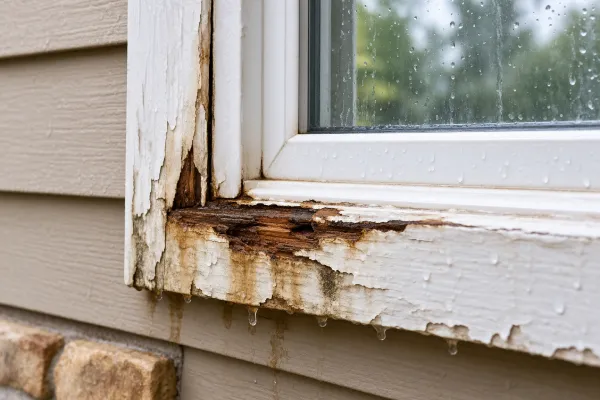
    Watch for peeling paint, cracks, discoloration, swelling, and soft areas.

    Soft wood is especially important.

    If you can press the wood and it feels spongy or begins to crumble, the damage may extend farther than you can see from the surface.

    Sometimes what looks like a small repair becomes considerably larger once the damaged material is removed.

    The Problem May Be Above the Window

    This is where finding a window leak can become tricky.

    Water appearing at the bottom or side of a window may actually be entering somewhere above it.

    Rainwater can get behind siding or exterior trim. Problems with flashing can also allow water into the wall.

    Gravity takes over from there.

    The water travels downward until it reaches an opening or another place where it becomes visible. That might happen to be around your window.

    So if the window looks properly sealed but water keeps appearing, the search may need to move upward.

    Look at the Wall Around the Window

    Don’t concentrate only on the glass and window frame.

    Look at the surrounding wall, both inside and outside.

    Inside, watch for water stains, bubbling paint, damaged drywall, or discoloration around the window.

    Outside, look for cracks, gaps, damaged siding, loose trim, or places where water could be getting behind the exterior materials.

    These clues can help narrow down where the problem is starting.

    Don’t Just Seal the Inside

    When homeowners discover water leaking around a window, it’s tempting to grab a tube of caulk and seal the area where the water appears inside.

    That may hide the problem temporarily, but it doesn’t necessarily stop the water.

    If rainwater is entering from outside and traveling through the wall, the source of the leak needs to be found and corrected.

    Otherwise, water can continue getting into materials you can’t see.

    The inside may look better while the damage behind it continues.

    Pay Attention to Rotten Wood

    Glenn encounters rotten wood frequently when dealing with water damage.

    Once trim or another piece of wood begins deteriorating, simply painting or caulking over it usually isn’t enough.

    Damaged material may need to be removed so you can see how far the deterioration extends.

    Sometimes the wood underneath is perfectly solid.

    Other times, removing one damaged piece reveals more water damage behind it.

    You really don’t know until you get to sound material.

    Watch What Happens When It Rains

    Rain can provide useful clues.

    Does the problem happen during every rain or only during a hard, wind-driven storm?

    Does the water appear immediately?

    Does it show up several hours later?

    Does it happen when rain comes from one particular direction?

    Those details can help when you’re trying to determine where the water is entering.

    If you notice a pattern, make a mental note of it. Better yet, write it down.

    Finding the Source Comes Before Repairing the Damage

    This has become an important theme throughout our Water Damage Series.

    In Part 1, we talked about how a small water leak can eventually turn into a big repair. In Part 2, we looked at some of the common signs of water damage.

    Now we’re looking at one of those signs more closely.

    If you discover water around a window, don’t ignore it. But don’t assume the place where you see the water is necessarily where the problem began.

    Look at the window. Look at the caulk and trim. Look above it. Look at the surrounding wall.

    Most importantly, find out where the water is getting in.

    Once you stop the water, you can deal with the damage it left behind.

    That’s how you keep the same repair from coming back the next time it rains.

    Glenn’s Repairs

  • After a Boil Water Notice Is Lifted: What Should You Do at Home?

    After a Boil Water Notice Is Lifted: What Should You Do at Home?

    When a boil water notice is lifted, it is certainly good news—but there are still a few things you should do around your home before everything goes completely back to normal. That became especially relevant for some of our neighbors in the Sharp and Davilla area this week, when Bell-Milam-Falls Water Supply Corporation issued a boil water notice on September 23 following a loss of water or low water pressure and later rescinded it.

    Once your water supplier officially lifts a boil water notice, the water has been determined to be safe to drink again. But water that was already sitting in household plumbing, filters, ice makers and appliances may need a little attention.

    Here are some simple steps to take.

    First, Make Sure the Notice Really Has Been Lifted

    Don’t assume the water is safe simply because the water is running normally again.

    Wait until your water supplier or local authorities have officially rescinded the boil water notice.

    In Texas, a public water system must correct the problem, return the system to normal operating conditions and complete required testing before a boil water notice can be lifted.

    For the recent local notice, Bell-Milam-Falls WSC announced later on September 23 that the notice affecting the Davilla and Sharp area had been rescinded.

    Flush Your Faucets

    After a boil water notice is lifted, it is a good idea to flush your household plumbing.

    Run cold water through your faucets for several minutes. This helps move fresh water through the pipes and clears out water that may have been sitting in your home’s plumbing during the disruption.

    Don’t forget faucets that aren’t used as often, such as those in a guest bathroom, utility room or outdoor sink.

    If your home experienced a noticeable loss of water pressure, flushing your faucets and showers is particularly important.

    Don’t Forget the Refrigerator and Ice Maker

    Your refrigerator may be connected directly to your home’s water supply.

    If ice was made while the boil water notice was in effect, throw that ice away. You don’t want to keep using ice made from water that was under the advisory.

    Your refrigerator’s water dispenser and ice maker may also need to be flushed according to the manufacturer’s instructions.

    This is one of those little things that can easily be forgotten once we hear that the water is safe again.

    Check Your Water Filters

    If you have a refrigerator filter, under-sink filter or another point-of-use water filtration system, check the manufacturer’s instructions about what should be done following a boil water notice.

    Some filters may need to be replaced.

    A household water filter shouldn’t automatically be considered protection during a boil water notice. Most common household filters are not designed to remove every type of bacteria or virus that may be of concern during an advisory.

    That is why public-health officials generally tell residents to follow the boil-water instructions even when they normally drink filtered water.

    What About a Reverse Osmosis System?

    Some homes in our area—including ours—use a reverse osmosis system for drinking water.

    Even if you have an RO system, you should still follow the instructions issued by your water supplier during a boil water notice unless the manufacturer and local health authorities specifically say otherwise.

    After the notice is lifted, check the instructions for your particular RO system. Depending on the system and circumstances, filters, membranes or storage tanks may require flushing, sanitizing or other maintenance.

    Not every system is the same, so this is one situation where the manufacturer’s instructions matter.

    Run Your Water Softener

    If you have a water softener, public-health guidance recommends running it through a regeneration cycle after a boil water advisory has ended.

    That allows fresh water to move through the system before you return to normal use.

    Again, check your particular manufacturer’s instructions if you’re unsure how to do this.

    What About Coffee Makers and Other Appliances?

    Think about appliances around your kitchen that automatically draw water from a water line.

    That might include an automatic coffee maker, refrigerator dispenser, ice machine or other appliance.

    If the appliance received water while the boil notice was in effect, follow the manufacturer’s directions for flushing and cleaning it before using it again.

    For an ordinary coffee maker that you fill by hand, simply wash it as you normally would and begin with fresh water once the notice has officially been lifted.

    You Don’t Have to Panic and Clean the Whole House

    Once the water supplier has officially announced that the water is safe again, there is no reason to turn the situation into a massive house-cleaning project.

    You don’t normally need to scrub every surface, wash every dish in the cabinets or throw away everything that might have come near tap water.

    Concentrate on the places where water actually sits or flows: your faucets, filters, refrigerator water system, ice maker and other water-connected appliances.

    A little common sense goes a long way.

    Keep Emergency Drinking Water on Hand

    A boil water notice is also a good reminder to keep some drinking water stored at home.

    Water interruptions can happen because of broken water lines, loss of pressure, severe weather, equipment problems and other unexpected events.

    Having bottled water available can make those first few hours much easier—particularly for older adults, families with small children, people with health concerns and households with pets.

    Here in rural Central Texas, it never hurts to be prepared for an interruption in water service.

    Back to Normal in Sharp and Davilla

    For residents affected by the September 23 notice, the good news is that Bell-Milam-Falls WSC has officially rescinded the boil water notice for the Davilla and Sharp area.

    Once a notice is lifted, taking a few minutes to flush your plumbing and check the appliances and filters that use household water can help get everything back to normal.

    At Driscoll Home Services, we keep an eye on local information that can affect homes and families throughout Milam County. Sometimes something as simple as knowing what to do after a water interruption can make taking care of your home a little easier.

  • Milam County Wildfire Contained After Wednesday Fire

    Milam County Wildfire Contained After Wednesday Fire

    A Milam County wildfire reported Wednesday, September 23, has now been contained. But the incident is another reminder of just how quickly fires can become a concern during the hot, dry conditions we’ve been experiencing in Central Texas.

    The wildfire, identified as Milam 8936, was reported in Milam County Wednesday afternoon. The National Weather Service in Fort Worth issued a special spot weather forecast for the fire at the request of the Texas A&M Forest Service.

    Current fire-tracking information reports the fire at approximately 8 acres and 100% contained.

    That’s good news for our Milam County neighbors.

    Weather Was a Concern for Firefighters

    Weather can make an enormous difference when firefighters are trying to contain a wildfire.

    Wednesday evening, the National Weather Service reported a small chance of scattered showers and an isolated thunderstorm near the fire. While rain might sound like good news, thunderstorms can also create gusty outflow winds that can make firefighting more difficult.

    The forecast called for temperatures to return to the upper 90s Thursday afternoon, with relative humidity dropping to around 35%.

    A Timely Reminder During Dry Conditions

    We recently reported that Milam County remains under a burn ban, and this fire is a good reminder of why we need to be particularly careful right now.

    It doesn’t take a huge wildfire to pose a danger. When grass, brush and other vegetation are dry, a small spark can start a fire that spreads rapidly under the right conditions.

    Texas A&M Forest Service has warned that drought and extreme heat have left fuels critically dry across portions of Central Texas.

    Activities around our homes and farms can sometimes provide an accidental ignition source. Burning debris is an obvious concern, but vehicles, trailers, mowers and other equipment can also create sparks or enough heat to ignite dry vegetation.

    Wildfire Prevention

    Milam County Wildfire Is Contained

    Fortunately, the latest information indicates that the Milam 8936 fire is now 100% contained.

    Containment does not necessarily mean every part of a wildfire has stopped burning. It means firefighters have established a control line around the fire that is expected to prevent it from spreading beyond that perimeter.

    Conditions can change, so residents should continue to rely on official sources for current wildfire and emergency information.

    Let’s Continue to Be Careful

    Those of us who live in rural Central Texas know that dry grass and brush are simply part of life here. But during periods of elevated wildfire danger, a little extra caution can make a big difference.

    Avoid outdoor burning when restrictions are in place, be careful when operating equipment around dry vegetation, and make sure trailer chains aren’t dragging on the road where they can create sparks.

    And if you see smoke or a fire that appears to be out of control, don’t assume someone else has already reported it.

    At Driscoll Home Services, we’ll continue watching news that affects Milam County and the surrounding Central Texas communities and share important information with our customers and neighbors.

  • Milam County Data Centers: What the Growth Could Mean for Local Residents

    Milam County Data Centers: What the Growth Could Mean for Local Residents

    Milam County data centers are becoming a much bigger part of the local landscape. It was once mostly a story about cryptocurrency mining around Rockdale. But it is quickly becoming a much larger story. Involving artificial intelligence, enormous computing facilities, and major investments. And there are questions about how all of this growth could affect the communities where we live.

    For those of us who call Milam County home, these projects are worth paying attention to. They can bring jobs and investment to the area. But facilities of this size also raise questions about electricity, water, roads, and other local resources.

    Another Large Data Center Planned for Milam County

    One of the projects attracting attention is the planned Freebird data center near Burlington.

    According to state filings, the project represents an investment of approximately $470 million and is expected to include about 548,950 square feet of new construction.

    That is a substantial development for a rural county like ours.

    Large projects can mean construction jobs while a facility is being built as well as permanent positions once it begins operating. They can also increase the local tax base and bring additional businesses and investment into the area.

    But Freebird isn’t the only major data center project coming to Milam County.

    Artificial Intelligence Is Coming to Milam County

    Another enormous project involves OpenAI and SB Energy, which are developing an artificial intelligence data center campus in Milam County.

    The planned facility is expected to have approximately 1.2 gigawatts of computing capacity.

    To put that in perspective, these aren’t ordinary office buildings filled with computers. Modern artificial intelligence requires enormous amounts of computing power. Thousands of specialized computer systems may operate around the clock, which means the facilities supporting them can require tremendous amounts of electricity.

    That is one reason rural areas with available land and access to electrical infrastructure have become attractive locations for these projects.

    Milam County happens to have both.

    Rockdale Has Already Seen the Beginning of This Change

    For people around Rockdale, large computing facilities aren’t entirely new.

    The former Alcoa property has already become home to large cryptocurrency mining operations, and we previously wrote about the growth of data centers around Rockdale.

    What is happening now, however, appears to be another stage of that development.

    Instead of primarily talking about cryptocurrency mining, we are now seeing companies investing heavily in the infrastructure needed for artificial intelligence and high-performance computing.

    That could make Milam County increasingly important in a rapidly growing technology industry.

    What About Electricity?

    Electricity is probably one of the first things many homeowners think about when they hear how much power these facilities can consume.

    Texas already has a rapidly growing population and increasing demand for electricity. Adding very large data centers to the grid creates another source of demand.

    That doesn’t automatically mean our electric bills will suddenly increase because a data center opens nearby. The Texas electrical system is complicated, and many factors affect electricity prices.

    Still, the amount of electricity required by large data centers has become important enough that state officials, utilities, and ERCOT are paying close attention to how these facilities connect to the grid and how future demand will be handled.

    For local residents, it is a subject worth watching as these projects move forward.

    Water Is Another Concern

    Water is particularly important to those of us living in Central Texas.

    Some types of data centers use significant amounts of water for cooling, while others use cooling systems designed to greatly reduce water consumption.

    That makes it important to look at each project individually rather than assuming every data center operates the same way.

    In a rural county where many families depend on wells, groundwater, municipal systems, agriculture, and livestock, questions about water use are reasonable ones to ask.

    Residents will want to know where a facility’s water will come from, how much it expects to use, and what cooling technology will be used.

    Texas Officials Are Taking a Closer Look

    The rapid growth of data centers isn’t just getting attention in Milam County.

    Texas officials are beginning to look more closely at the effect these enormous projects could have on the state’s resources and infrastructure.

    On September 21, Governor Greg Abbott directed state agencies to temporarily halt certain permits involving new data centers while Texas evaluates issues involving electricity and water demands.

    That doesn’t mean data-center development in Texas is stopping. It does show, however, that state leaders recognize the size and speed of this new development and the questions that come with it.

    What Could This Mean for Milam County?

    There are potential benefits.

    Hundreds of millions of dollars in private investment can create construction work, permanent jobs, tax revenue, and opportunities for other local businesses.

    There can also be challenges.

    Large developments can affect roads, electrical infrastructure, water resources, housing, and the character of rural communities. Those effects may not appear overnight, and some may depend heavily on how individual projects are designed and operated.

    For Milam County residents, the important thing is to stay informed as the projects develop.

    A Big Change for a Rural Texas County

    Milam County has changed many times over the years. Agriculture, Alcoa, energy production, cryptocurrency mining, and now artificial intelligence have all played—or may soon play—a role in our local economy.

    The newest wave of data-center development could become one of the largest economic changes our area has seen in years.

    Whether you live in Rockdale, Cameron, Thorndale, Milano, Buckholts, Burlington, or somewhere out in the country like we do, these developments are happening close to home.

    At Driscoll Home Services, we try to keep up with news that could affect the homes, families, and communities we serve throughout Milam County.

    We’ll continue watching the growth of these projects and sharing important developments as they happen.

  • Milam County Burn Ban Update: Outdoor Burning Still Restricted

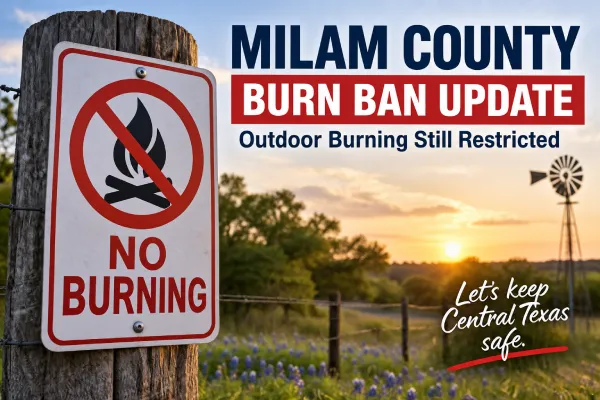
    Milam County Burn Ban Update: Outdoor Burning Still Restricted

    If you live in Milam County and have been waiting for an opportunity to burn brush, leaves or other debris around your property, you’ll need to wait a little longer.

    Milam County remains under a burn ban.

    The current burn ban went into effect August 13, 2026, as dry conditions and wildfire concerns increased across Central Texas.

    With many of us living in rural areas where burning brush and yard debris is a normal part of taking care of our property, it’s important to know when restrictions are in place.

    Why Burn Bans Matter

    It doesn’t take a large fire to cause trouble when grass and vegetation are dry.

    A small pile of burning brush can throw sparks farther than you might expect. Wind can carry those sparks into dry grass, a neighboring pasture or along a fence line, allowing a fire to spread quickly.

    Equipment can also start fires accidentally. Mowers, welding equipment, chains dragging on pavement and other activities that produce heat or sparks can become ignition sources during very dry conditions.

    That makes a little extra caution around the farm and yard worthwhile even when you’re not intentionally burning anything.

    Texas A&M Forest Service – Current Wildfire Status

    What Does the Milam County Burn Ban Mean?

    A county burn ban generally restricts outdoor burning in the unincorporated portions of the county.

    There can be specific exceptions under Texas law for certain agricultural, public-safety, utility and professionally managed prescribed-burning activities. Because the exact restrictions depend upon the county’s current order, residents shouldn’t assume that a particular type of outdoor fire is allowed.

    If you’re uncertain, check with Milam County officials before you burn.

    Don’t Let a Little Rain Fool You

    One good rain doesn’t necessarily mean a burn ban has ended.

    Soil and vegetation can remain dry, and county officials determine when conditions have improved enough to lift the restriction.

    That’s why it’s better to check the current status rather than assuming the ban is over because your property received some rain.

    A Good Time to Clean Up—Just Don’t Burn It Yet

    You don’t necessarily have to stop your fall yard and property cleanup.

    You can still gather fallen limbs, clear brush away from buildings and fences, and clean up areas around your home. Just keep anything you would normally burn piled safely until outdoor burning is permitted again.

    Clearing dry vegetation from around the house can also help reduce available fuel if a grass or wildfire occurs nearby.

    Wildfire Preparedness – Protecting Your Home and Property

    Check Before You Burn

    Burn-ban conditions can change, so always check the current status before starting an outdoor fire.

    The Texas A&M Forest Service maintains statewide burn-ban information, while Milam County officials are the best source for the restrictions that apply locally.

    We’ll also continue watching local conditions and share important updates when they affect our neighbors.

    At Driscoll Home Services, we live and work here too. Our Central Texas News articles are one way we try to keep our customers and neighbors informed about things happening in Milam County and the surrounding communities.