
Glenn’s Repairs Water Damage Series — Part 1
A small water leak may not seem like much of a problem. A little drip around a window, a damp spot under the sink, or a small stain on the ceiling can be pretty easy to ignore. After all, if there isn’t water pouring into the house, how bad can it really be?
Unfortunately, sometimes it can be pretty bad.
Water damage is one of the most common problems Glenn runs across while doing home repairs. Quite often, a water damage repair can be traced back to a small leak that wasn’t noticed or taken care of right away. What started as a minor problem eventually became a much bigger repair.
A Little Water Can Do a Lot of Damage
One of the problems with a small leak is that it may go unnoticed for a long time. Water can slowly work its way behind walls, underneath flooring, around windows and doors, or into the wood that makes up part of your home.
By the time you actually see the damage, the leak may have been there for quite a while.
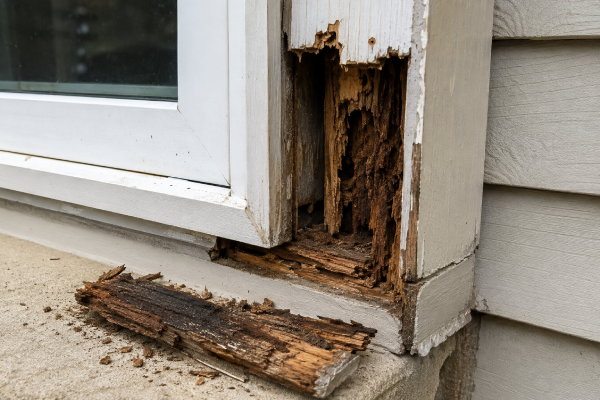
That little soft spot in the wood may be bigger underneath than it looks. A small stain on the drywall may be coming from water traveling from somewhere else. What looks like a little caulking problem around a window may turn out to include damaged or rotten wood.
This is why Glenn doesn’t just look at the spot where the damage is showing. He wants to know where the water is coming from in the first place.
Water Damage Repair Starts With Finding the Source
Repairing water damage without stopping the water is usually just a temporary fix.
You can replace a piece of damaged wood, patch some drywall, or paint over a stain, but if water is still getting in, sooner or later you’re going to have the same problem again.
Sometimes finding the source is fairly simple. Other times, it takes a little detective work.
Water can come from a leaking pipe, a roof problem, damaged caulking, a poorly sealed window or door, or water getting behind exterior materials. And because water can travel, the place where you see the damage isn’t necessarily the place where the leak started.
The important thing is to find out why it is happening before repairing what the water damaged.
Watch for the Early Warning Signs
You don’t have to wait until you have a major water problem to do something about it.
Keep an eye out for things that don’t look or feel quite right. Peeling or bubbling paint, discoloration on a wall or ceiling, swollen wood, soft spots, loose trim, warped flooring, and a persistent musty smell can all be reasons to take a closer look.
If something stays damp when it shouldn’t, don’t assume it will simply dry out and be fine.
Wet materials can deteriorate, and moisture can also create conditions where mold can grow. See EPA guidance on moisture and mold. Finding the source and getting things dried out quickly can help prevent a relatively small problem from becoming something much more serious.
The Longer You Wait, the Bigger the Repair Can Become
This is probably the most important lesson Glenn has learned from dealing with water damage: water doesn’t usually fix itself.
A small opening continues letting water in. Damp wood can deteriorate. Damage can spread into materials that weren’t originally affected.
A water damage repair that might have involved replacing or sealing one small area can eventually require removing considerably more material just to get back to solid, undamaged wood.
That’s when a small repair starts becoming a big repair.
Take a Look Around Your Home
Every once in a while, take a slow walk around your house and actually look at it.
Check around your windows and exterior doors. Look underneath sinks. Pay attention to the ceilings. Look for damaged caulking, peeling paint, soft wood, discoloration, and anything else that has changed since the last time you noticed it.
You know your home better than anybody. If something suddenly looks different, there is usually a reason.
Catching a water problem early won’t necessarily make the repair disappear, but it may keep a small problem from becoming a much larger and more expensive one.
And when it comes to water damage repair, sooner is almost always better than later.
Leave a Reply