
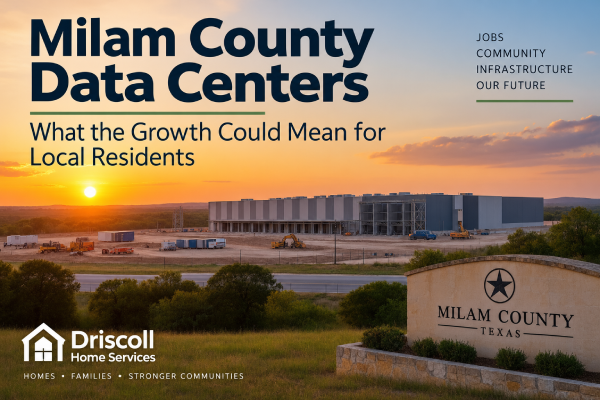
Milam County data centers are becoming a much bigger part of the local landscape. It was once mostly a story about cryptocurrency mining around Rockdale. But it is quickly becoming a much larger story. Involving artificial intelligence, enormous computing facilities, and major investments. And there are questions about how all of this growth could affect the communities where we live.
For those of us who call Milam County home, these projects are worth paying attention to. They can bring jobs and investment to the area. But facilities of this size also raise questions about electricity, water, roads, and other local resources.
Another Large Data Center Planned for Milam County
One of the projects attracting attention is the planned Freebird data center near Burlington.
According to state filings, the project represents an investment of approximately $470 million and is expected to include about 548,950 square feet of new construction.
That is a substantial development for a rural county like ours.
Large projects can mean construction jobs while a facility is being built as well as permanent positions once it begins operating. They can also increase the local tax base and bring additional businesses and investment into the area.
But Freebird isn’t the only major data center project coming to Milam County.
Artificial Intelligence Is Coming to Milam County
Another enormous project involves OpenAI and SB Energy, which are developing an artificial intelligence data center campus in Milam County.
The planned facility is expected to have approximately 1.2 gigawatts of computing capacity.
To put that in perspective, these aren’t ordinary office buildings filled with computers. Modern artificial intelligence requires enormous amounts of computing power. Thousands of specialized computer systems may operate around the clock, which means the facilities supporting them can require tremendous amounts of electricity.
That is one reason rural areas with available land and access to electrical infrastructure have become attractive locations for these projects.
Milam County happens to have both.
Rockdale Has Already Seen the Beginning of This Change
For people around Rockdale, large computing facilities aren’t entirely new.
The former Alcoa property has already become home to large cryptocurrency mining operations, and we previously wrote about the growth of data centers around Rockdale.
What is happening now, however, appears to be another stage of that development.
Instead of primarily talking about cryptocurrency mining, we are now seeing companies investing heavily in the infrastructure needed for artificial intelligence and high-performance computing.
That could make Milam County increasingly important in a rapidly growing technology industry.
What About Electricity?
Electricity is probably one of the first things many homeowners think about when they hear how much power these facilities can consume.
Texas already has a rapidly growing population and increasing demand for electricity. Adding very large data centers to the grid creates another source of demand.
That doesn’t automatically mean our electric bills will suddenly increase because a data center opens nearby. The Texas electrical system is complicated, and many factors affect electricity prices.
Still, the amount of electricity required by large data centers has become important enough that state officials, utilities, and ERCOT are paying close attention to how these facilities connect to the grid and how future demand will be handled.
For local residents, it is a subject worth watching as these projects move forward.
Water Is Another Concern
Water is particularly important to those of us living in Central Texas.
Some types of data centers use significant amounts of water for cooling, while others use cooling systems designed to greatly reduce water consumption.
That makes it important to look at each project individually rather than assuming every data center operates the same way.
In a rural county where many families depend on wells, groundwater, municipal systems, agriculture, and livestock, questions about water use are reasonable ones to ask.
Residents will want to know where a facility’s water will come from, how much it expects to use, and what cooling technology will be used.
Texas Officials Are Taking a Closer Look
The rapid growth of data centers isn’t just getting attention in Milam County.
Texas officials are beginning to look more closely at the effect these enormous projects could have on the state’s resources and infrastructure.
On September 21, Governor Greg Abbott directed state agencies to temporarily halt certain permits involving new data centers while Texas evaluates issues involving electricity and water demands.
That doesn’t mean data-center development in Texas is stopping. It does show, however, that state leaders recognize the size and speed of this new development and the questions that come with it.
What Could This Mean for Milam County?
There are potential benefits.
Hundreds of millions of dollars in private investment can create construction work, permanent jobs, tax revenue, and opportunities for other local businesses.
There can also be challenges.
Large developments can affect roads, electrical infrastructure, water resources, housing, and the character of rural communities. Those effects may not appear overnight, and some may depend heavily on how individual projects are designed and operated.
For Milam County residents, the important thing is to stay informed as the projects develop.
A Big Change for a Rural Texas County
Milam County has changed many times over the years. Agriculture, Alcoa, energy production, cryptocurrency mining, and now artificial intelligence have all played—or may soon play—a role in our local economy.
The newest wave of data-center development could become one of the largest economic changes our area has seen in years.
Whether you live in Rockdale, Cameron, Thorndale, Milano, Buckholts, Burlington, or somewhere out in the country like we do, these developments are happening close to home.
At Driscoll Home Services, we try to keep up with news that could affect the homes, families, and communities we serve throughout Milam County.
We’ll continue watching the growth of these projects and sharing important developments as they happen.