
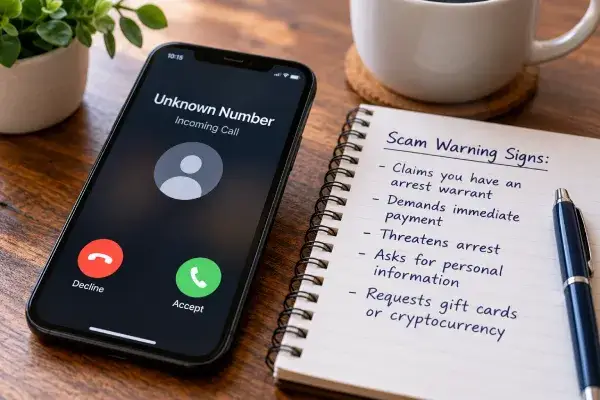
Central Texas residents are being warned about fake arrest warrant scams. Criminals are posing as law enforcement officers and demanding money for unpaid tickets and outstanding warrants.
The Waco Police Department and McLennan County Sheriff’s Office recently issued warnings about these scams. Local news outlets reported the warnings on October 26, 2026.
Scammers are using fear and urgency to pressure people into paying money. They may sound convincing, but residents should not trust unexpected demands for immediate payment.
How Fake Arrest Warrant Scams Work
The scam often begins with an unexpected telephone call, text message, or email.
The person contacting you claims to represent a police department or sheriff’s office. They may say you have an outstanding arrest warrant or an unpaid traffic ticket.
Next, they demand immediate payment to resolve the supposed problem.
Some scammers threaten arrest if you refuse to cooperate. Others claim that paying a fine will prevent legal trouble.
The goal is to frighten you into sending money before you have time to verify the claim.
Warning Signs of a Law Enforcement Scam
Fake arrest warrant scams often share several warning signs.
- Immediate payment demands: The caller insists you must pay right away.
- Threats of arrest: You are told that officers will arrest you unless you send money.
- Unexpected contact: Someone contacts you about a legal problem you knew nothing about.
- Requests for personal information: The caller asks for financial details or other sensitive information.
- Unusual payment methods: You are instructed to use gift cards, cryptocurrency, or another difficult-to-reverse payment method.
Scammers may also disguise their telephone numbers. This can make a call appear to come from a legitimate government office.
Even a familiar number on your caller ID does not guarantee the call is genuine.
What Central Texas Police Want Residents to Know
Police emphasize that law enforcement agencies do not demand immediate payment over the telephone to prevent an arrest.
The Waco Police Department and McLennan County Sheriff’s Office are urging residents to recognize these fraudulent requests.
Similar scams may also involve computer pop-ups, credit card accounts, and online services such as Google or Amazon.
Although the recent warnings came from McLennan County, residents throughout Central Texas should remain alert.
People in Milam County, Bell County, Williamson County, and surrounding communities can encounter the same tactics.
What to Do if You Receive a Suspicious Call
If someone contacts you about an unexpected warrant or fine, take these precautions.
- Hang up. Do not continue a conversation with someone demanding immediate payment.
- Do not send money. Never make a payment simply because a caller threatens arrest.
- Protect your information. Do not share your Social Security number, banking details, or passwords.
- Verify the claim independently. Find the law enforcement agency’s official telephone number yourself. Do not use a number supplied by the caller.
- Report the incident. Contact your local police department or sheriff’s office.
If you receive a suspicious text or email, avoid clicking links or opening attachments.
You can also discuss the situation with a trusted family member or friend before taking action.
Help Protect Older Family Members and Neighbors
These scams can frighten anyone. However, older adults may be particularly concerned when someone claims they face arrest or legal trouble.
Talk with elderly parents, relatives, and neighbors about these warnings.
Remind them that they do not have to make an immediate decision because someone on the telephone demands it.
Encourage them to hang up and contact someone they trust.
A short conversation today could prevent a serious financial loss tomorrow.
What if You Already Sent Money?
If you believe you have been scammed, act quickly.
Contact your bank, credit card company, or payment provider immediately. Explain what happened and ask whether the transaction can be stopped or reversed.
Report the incident to your local law enforcement agency.
You can also file a report with the Federal Trade Commission at ReportFraud.ftc.gov.
Save any messages, telephone numbers, receipts, or transaction records that may help investigators.
Stay Alert and Share the Warning
Fake arrest warrant scams in Central Texas are a reminder that criminals often rely on fear to get what they want.
A legitimate legal matter should be verified through official channels. Never send money simply because someone threatens you over the telephone.
Share this warning with friends, family, and neighbors. The more people who recognize these scams, the harder it becomes for criminals to succeed.
Sources:
Leave a Reply