
October 20, 2026
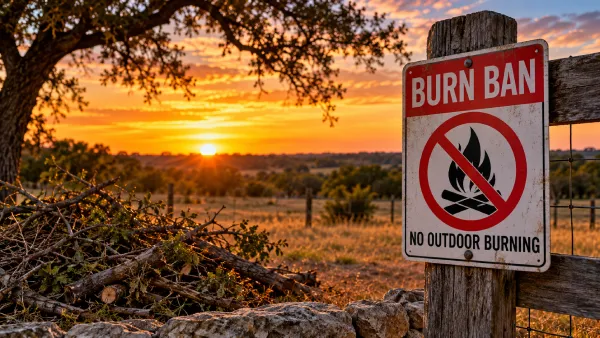
The Milam County burn ban remains an important safety concern for homeowners and rural property owners across Central Texas. Although some areas received rain in recent weeks, outdoor burning restrictions remain in place in Milam County and several neighboring counties, according to reports published October 19.
For residents of Rockdale, Cameron, Sharp, Milano, Thorndale, and surrounding communities, the message is simple. Don’t assume that a little rain means it’s safe or legal to burn brush, leaves, or other yard debris.
We previously reported on the Milam County burn ban and the restrictions affecting local residents.
Before lighting any outdoor fire, check the current restrictions.
Burn Bans Remain in Effect Across Central Texas
Recent rainfall has helped reduce wildfire danger in parts of Texas.
However, dry vegetation and changing weather conditions continue to create concerns.
According to an October 19 report from FOX 44, approximately 149 Texas counties were under outdoor burn bans.
The list included several counties in our area:
- Milam County
- Falls County
- Robertson County
- Burleson County
- Limestone County
- Coryell County
- Hamilton County
Coryell and Hamilton counties reinstated their burn bans during the previous week.
These restrictions are determined locally. A county may lift its burn ban while a neighboring county keeps one in place.
That is why homeowners should check the rules for their specific location.
Why Doesn’t Rain Automatically End a Burn Ban?
After a good rain, the grass may look greener and the ground may feel damp.
But that doesn’t mean wildfire danger has disappeared.
Dead grass, fallen leaves, brush piles, and other dry vegetation can become flammable again as conditions change.
Wind can also make a small fire difficult to control.
A fire that seems manageable in the morning may become dangerous if winds increase later in the day.
County officials consider local fire conditions before deciding whether to lift restrictions.
Until a burn ban is officially rescinded, residents must continue following the applicable rules.
What Does a Burn Ban Mean for Homeowners?
A county burn ban generally restricts outdoor burning that could start a wildfire.
For rural homeowners, this often means postponing activities such as:
- Burning brush piles
- Burning fallen tree limbs
- Burning leaves and yard debris
- Burning household trash
- Clearing land by burning vegetation
The exact restrictions and exceptions depend on the county’s official order.
Don’t assume that cooking fires, fire pits, or other outdoor flames are automatically permitted.
Check the current order or contact your local fire marshal before burning.
What Happens if Someone Violates a Burn Ban?
Violating an established county outdoor burn ban can result in a Class C misdemeanor.
According to recent Central Texas reporting, fines may reach $500 per violation.
But the financial consequences of an escaped fire can be much greater.
A grass fire can spread beyond the original property and threaten neighboring homes, barns, fences, equipment, and livestock.
In rural communities, volunteer fire departments are often the first to respond.
Preventing unnecessary fires helps protect both residents and the firefighters who serve them.
What Can You Do With Brush and Yard Debris Instead?
For many Central Texas homeowners, burning brush has traditionally been a convenient way to clear property.
A burn ban means finding another solution.
Fortunately, there are several alternatives.
1. Create a Brush Pile for Later Disposal
Collect fallen limbs and brush in a designated area away from buildings.
Keep the pile manageable and avoid placing it beneath power lines.
Remember that a brush pile can still become a fire hazard. Keep it away from ignition sources and maintain clear space around structures.
2. Use a Wood Chipper
A wood chipper can turn small branches into useful mulch.
Mulch can help retain soil moisture and reduce weeds around trees and garden beds.
Keep mulch away from direct contact with your home’s siding and foundation.
3. Compost Appropriate Yard Waste
Leaves and smaller plant materials can often be composted.
This reduces waste while producing organic material for gardens and landscaping.
Avoid adding treated lumber, plastics, or other unsuitable materials.
4. Arrange for Proper Disposal
Some communities provide brush collection or disposal services.
Check with your city or county for available options.
If you hire someone to haul away debris, make sure it will be disposed of legally.
Other Activities That Can Start Grass Fires
Outdoor burning isn’t the only activity that can start a wildfire.
Homeowners should also be careful when working outdoors during dry conditions.
Mowing dry grass: Lawn equipment can strike rocks or other objects and produce sparks.
Using power tools: Grinding, cutting, and welding can produce hot sparks that ignite nearby vegetation.
Parking on dry grass: Hot vehicle exhaust components can ignite dry vegetation.
Discarding cigarettes: Never throw cigarette butts onto the ground or out of a vehicle.
Operating outdoor equipment: Keep machinery properly maintained and watch for overheating.
When conditions are especially dry or windy, consider postponing work that could create sparks.
Protect Your Home Before a Wildfire Starts
You don’t have to wait for a wildfire warning to make your property safer.
A few maintenance tasks can help reduce fire hazards.
Keep leaves and other debris away from your house. Clear gutters and roof valleys. Remove dead vegetation near buildings.
Trim branches that hang over roofs or touch structures.
Move firewood, combustible materials, and unnecessary clutter away from your home.
Pay particular attention to barns, sheds, and other outbuildings.
For rural homeowners, it’s also important to keep driveways and gates accessible to emergency vehicles.
These precautions can make a difference if a grass fire approaches your property.
How to Check the Current Milam County Burn Ban
Burn bans can change quickly.
The Texas A&M Forest Service maintains a statewide map showing counties with outdoor burning restrictions.
Residents can check the map at:
Texas A&M Forest Service — Texas County Burn Bans
For the most current legal requirements, verify the county’s official burn-ban order.
Milam County residents can also contact the Milam County Fire Marshal’s Office with questions about outdoor burning.
Milam County Fire Marshal: 254-482-2341
Remember that city ordinances and other state regulations may apply even when a county burn ban has been lifted.
A Little Caution Can Prevent a Major Fire
Living in rural Central Texas has many advantages.
We enjoy open spaces, pastures, wooded areas, and room to spread out.
But those same surroundings can allow a grass fire to travel quickly when conditions are dry.
The continued Milam County burn ban is a reminder that recent rainfall doesn’t eliminate every fire hazard.
Before burning brush or starting any outdoor fire, check the current rules.
And whenever possible, choose a safer way to dispose of yard debris.
Protecting our homes, our neighbors, and our volunteer firefighters is worth the extra effort.
Leave a Reply